Which surface for a poolside in Morocco?
Composite, exotic hardwood, travertine or anti-slip porcelain: a comparison of poolside surfaces in Morocco. Wet grip, surface temperature, resistance to chlorine.
A poolside is the hardest-worked outdoor surface in a Moroccan house: it takes the overhead sun, chlorinated water, sun cream and sand, and people walk on it barefoot. Three criteria really count — wet grip, surface temperature and the absence of splinters. Everything else is secondary.
The four materials in contention
WPC composite wood
Wet grip: good on the grooved face, one of its strong points. Temperature: depends on the shade, comfortable in a pale colour. Splinters: none, ever. Upkeep: washing with soapy water once or twice a year.
It is the most balanced compromise for family use, and the reason it has become standard around pools. Our composite decking boards are double-sided: the grooved face where people walk, the grained face in the lounging area if you prefer.
Exotic hardwood
Wet grip: adequate at first, then it deteriorates — greyed, soiled timber becomes slippery. Temperature: fairly comfortable. Splinters: they appear after two to three years without upkeep. That is the major problem around a pool. Upkeep: annual oiling, sanding every three to four years.
Superb in the first year. The question is whether you will sand it every spring, indefinitely. We go into this comparison in our guide on composite wood or exotic hardwood.
Travertine and natural stone
Wet grip: very good in a tumbled or honed finish. Temperature: excellent — pale travertine stays surprisingly cool. Splinters: not applicable. Upkeep: a water repellent to renew, sensitivity to grease marks and acidic products.
It is the finest choice and the coolest underfoot. Its limits are the cost of installation, the sensitivity to marks — sun cream, tanning oil — and the difficulty of repairing a crack.
Anti-slip tiling (R11 porcelain)
Wet grip: very good if the slip rating is respected. Temperature: high in a dark shade, acceptable in a pale one. Splinters: not applicable. Upkeep: grout to maintain, prone to deposits and limescale.
Technically impeccable, economically competitive. The criticism levelled at it is aesthetic: the surface is cold and mineral, far from the warmth people want around a pool.
The decision table
| Criterion | Composite | Exotic hardwood | Travertine | R11 porcelain |
|---|---|---|---|---|
| Wet grip | Good | Variable | Very good | Very good |
| Coolness underfoot | Depends on shade | Good | Very good | Depends on shade |
| Splinters | Never | Yes, over time | — | — |
| Annual upkeep | Washing | Oiling + sanding | Water repellent | Grout |
| Resistance to salt / chlorine | Excellent | Medium | Good | Excellent |
| Repair after damage | Board by board | Sanding | Difficult | Tile by tile |
| Warmth of the result | High | Very high | High | Low |
Three installation rules specific to pools
The fall runs away from the pool
1% minimum, directed outwards. Run-off and splashes must go away from the water, not back into it carrying sand and sun cream.
The coping stays mineral
The coping proper — the piece that caps the pool edge — must stay in bedded stone or concrete. It performs a mechanical and sealing function that composite is not meant to take on. The composite surface starts just behind it, with a corner trim making a clean transition.
The fixings are A4 stainless
A pool environment is chemically aggressive: chlorine, salt, treatment products. A2 stainless shows rust spots there within a few years. A4 is the norm around a pool, even well away from the coast.
Choosing the shade: the underrated criterion
This is the most concrete advice we give in the showroom, and it applies to every material.
A dark surface in Moroccan sun becomes uncomfortable barefoot between midday and four in the afternoon — precisely the hours a pool gets used. It makes no difference whether it is anthracite composite, slate or black porcelain: the physics is the same.
Around a pool, choose pale: golden Teak, mid Walnut, beige travertine. You gain several degrees at the surface, and the look suits a poolside better anyway.
Combining materials
One solution we see more and more, and which works very well: travertine or stone for the coping and the immediate band around the pool, composite beyond it, over the lounging area and the sunbeds.
You get mineral coolness where people walk wet, and the warmth of wood where they settle — with limited upkeep over the larger area.
What we recommend, case by case
Family with children, heavy use: composite in a pale shade. No splinters, reliable grip, no heavy upkeep.
High-end villa, comfortable budget: travertine for the coping and the circulation band, composite over the lounging area.
Renovating an existing tiled poolside: composite on joists laid over the top, with no removal — quick, clean and reversible.
Holiday letting: composite without hesitation. No upkeep between lettings, and no splinter risk for guests.
Getting your poolside costed
Send us the dimensions of the area to be covered, even as a sketch, showing the outline of the pool — rectangular, L-shaped, with a beach entry. The geometry directly affects the offcut rate, and therefore the budget.
You receive an itemised costing within 24 working hours, boards, substructure and edge trims included.
From the theory to the site
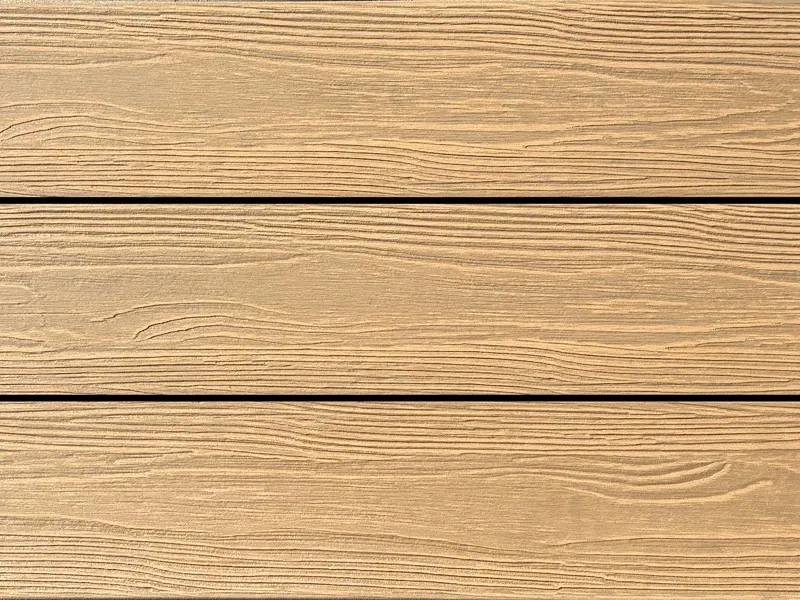 3100 × 140 × 22 mm
 Composite decking boards
Double-Sided Composite Decking Board — Teak-G
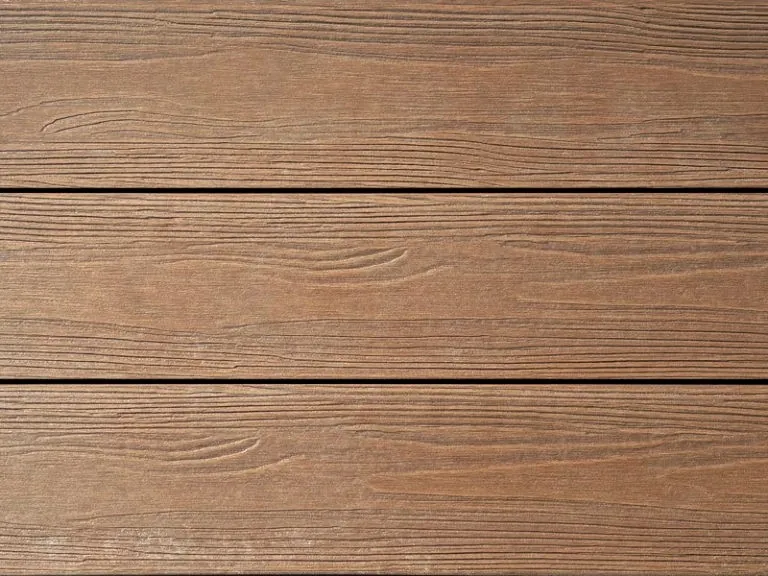 3100 × 140 × 22 mm
 Composite decking boards
Double-Sided Composite Decking Board — IPE-G
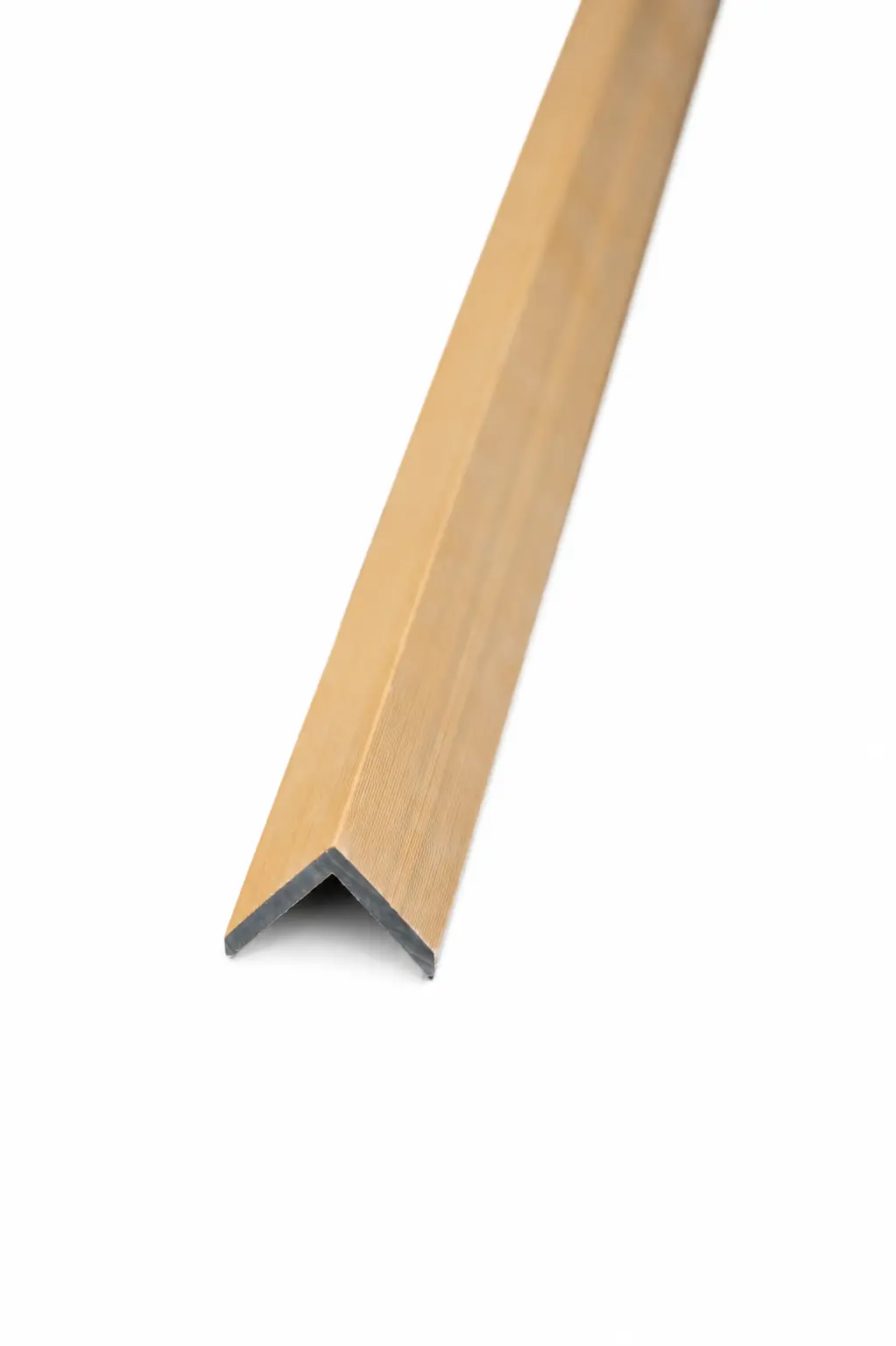 2900 × 50 × 50 mm
 Corner trims
Teak Corner Trim — L-Profile Composite Angle
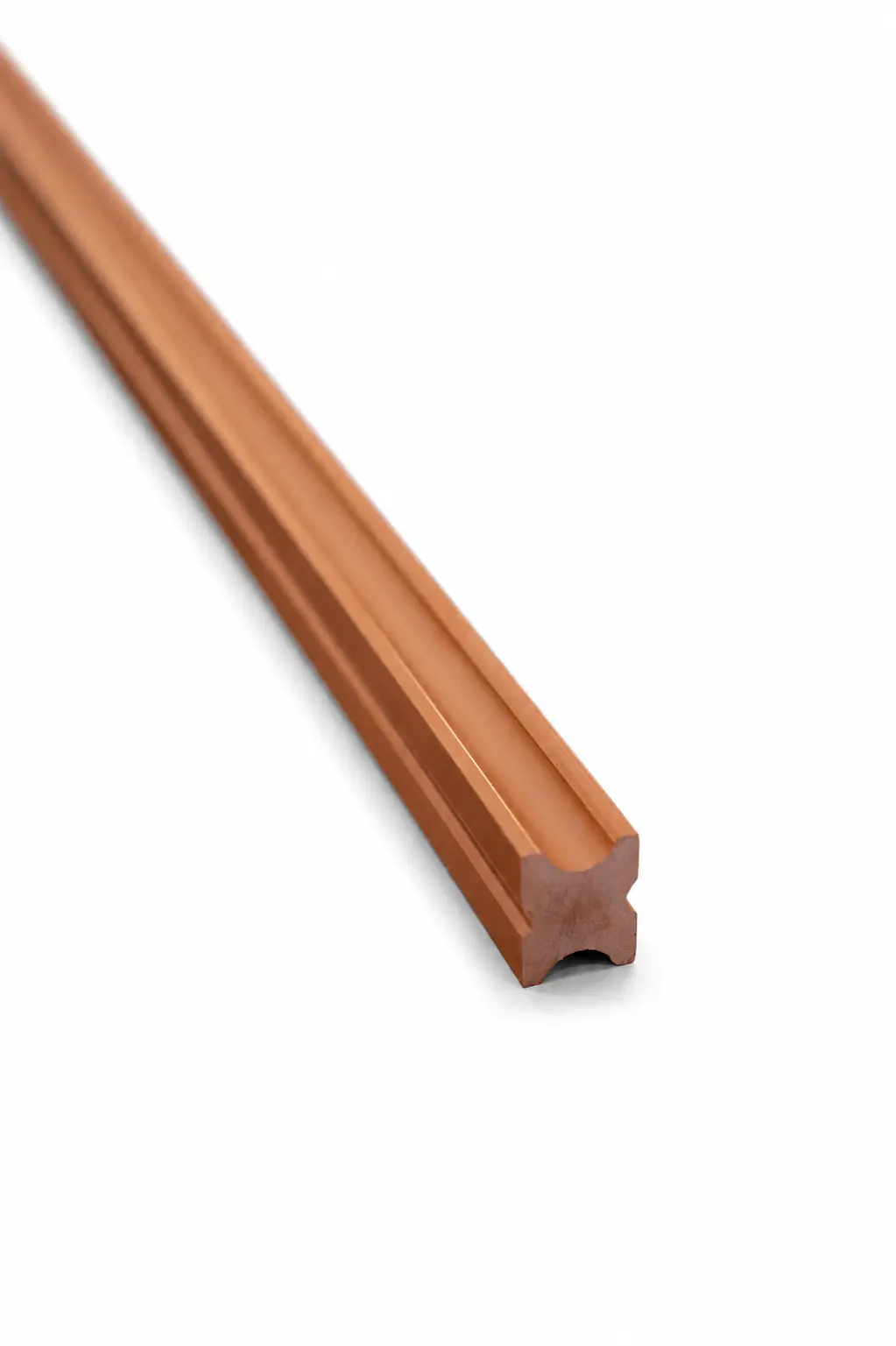 3100 × 40 × 30 mm
 Joists & accessories