Screens and privacy walls: blocking the view without closing yourself in
Composite tube screens: working out the screening ratio, choosing the section, standing up to wind and respecting height rules. The complete privacy screen guide for Morocco.
A neighbour’s line of sight ruins a terrace more surely than a poor floor covering. But a solid wall turns it into an enclosed yard: you gain privacy and lose the light and the air movement — two things that count for a lot in the Moroccan climate.
A screen settles exactly that compromise. Here is how to calculate one properly.
Working out the screening: the oblique view changes everything
This is the point almost everyone gets wrong.
A screen of 60 mm tubes spaced 40 mm apart screens roughly 60% seen head-on. On paper, that sounds insufficient.
But nobody looks at you square on and perpendicular. A neighbour on their terrace, a few metres to the side and often higher up, sees you obliquely. And at an oblique angle the tubes visually overlap: at 30°, that same configuration screens more than 85%.
That is why a well-calculated screen protects effectively while still letting air and a filtered light through.
| Spacing (60 mm tube) | Screening head-on | Screening at 30° |
|---|---|---|
| 20 mm | ≈ 75 % | Close to total |
| 30 mm | ≈ 67 % | Very high |
| 40 mm | ≈ 60 % | High |
| 60 mm | 50 % | Medium |
| 80 mm | ≈ 43 % | Filtering only |
In practice: 20 to 30 mm to block a close neighbour, 60 to 80 mm simply to filter the sun without closing off the view.
Choosing the section
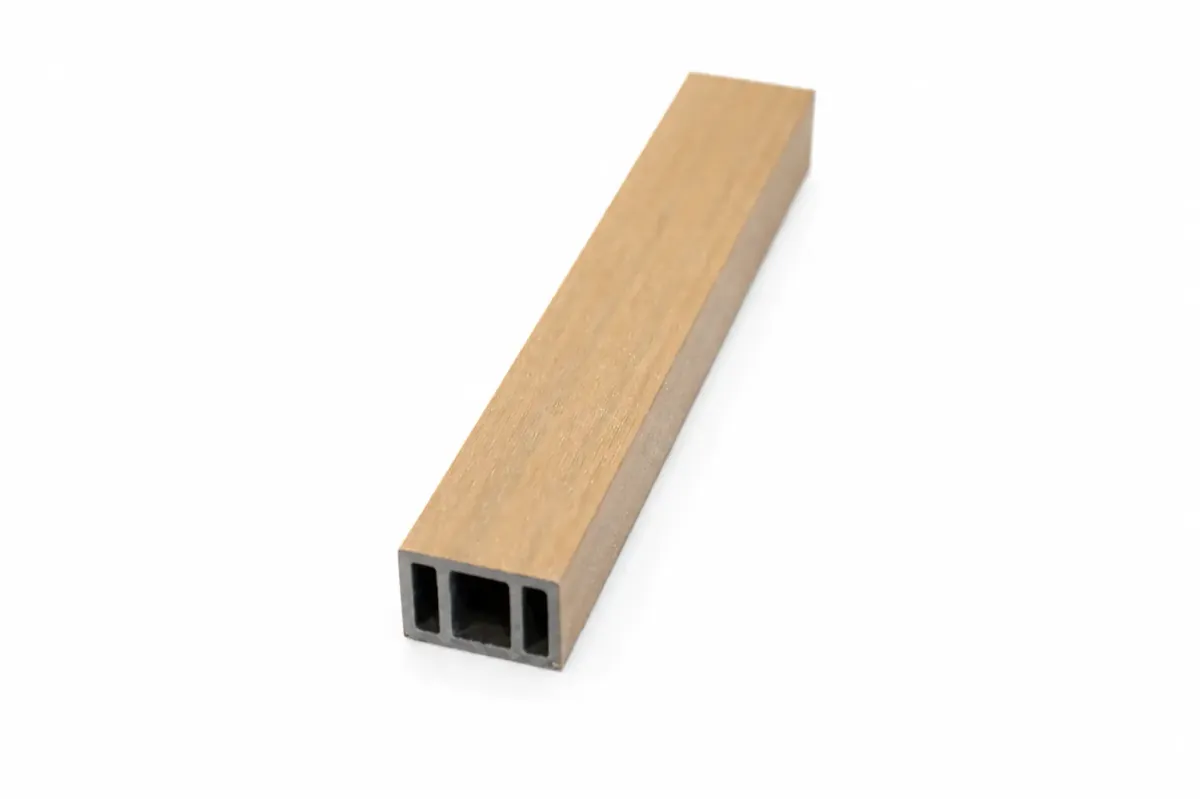
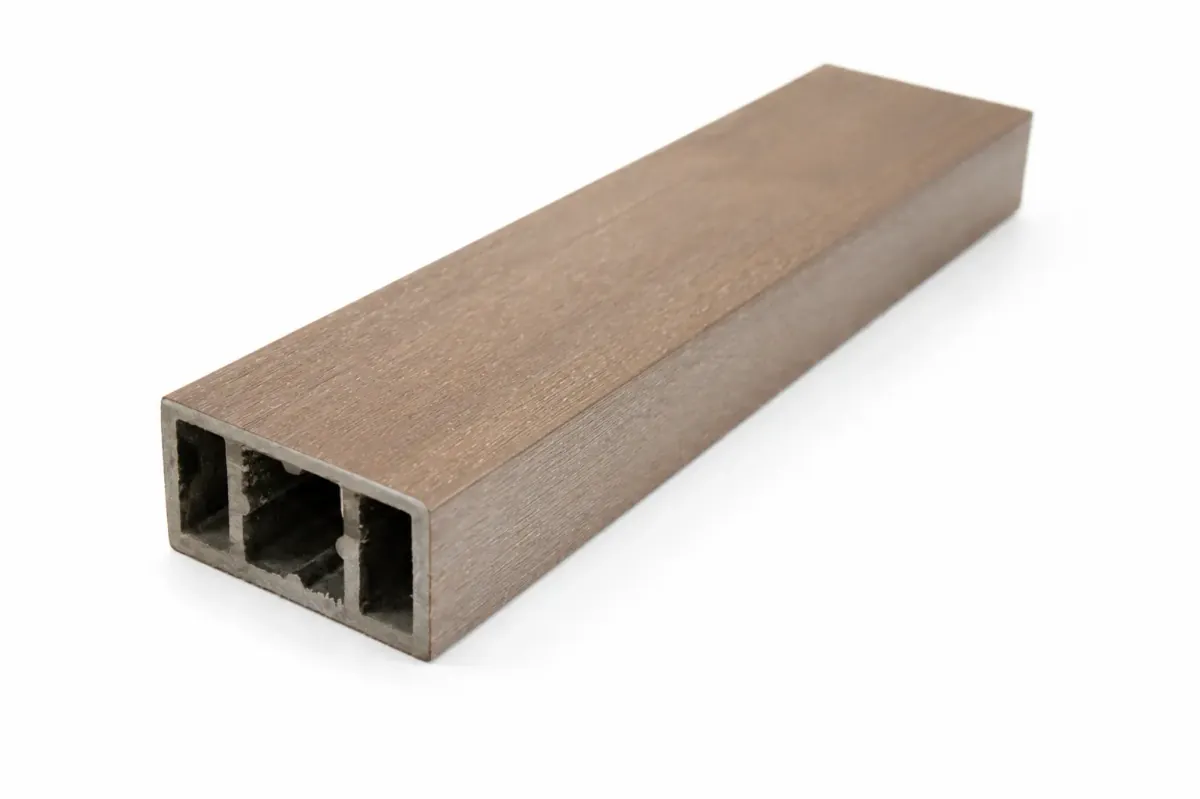
60 × 42 mm — the fine section
It produces a light, airy screen that cuts the sightlines without weighing anything down. It is the right choice for a terrace divider, a decorative balustrade infill or a solar filter in front of a window.
It is easy to handle and it catches little wind.
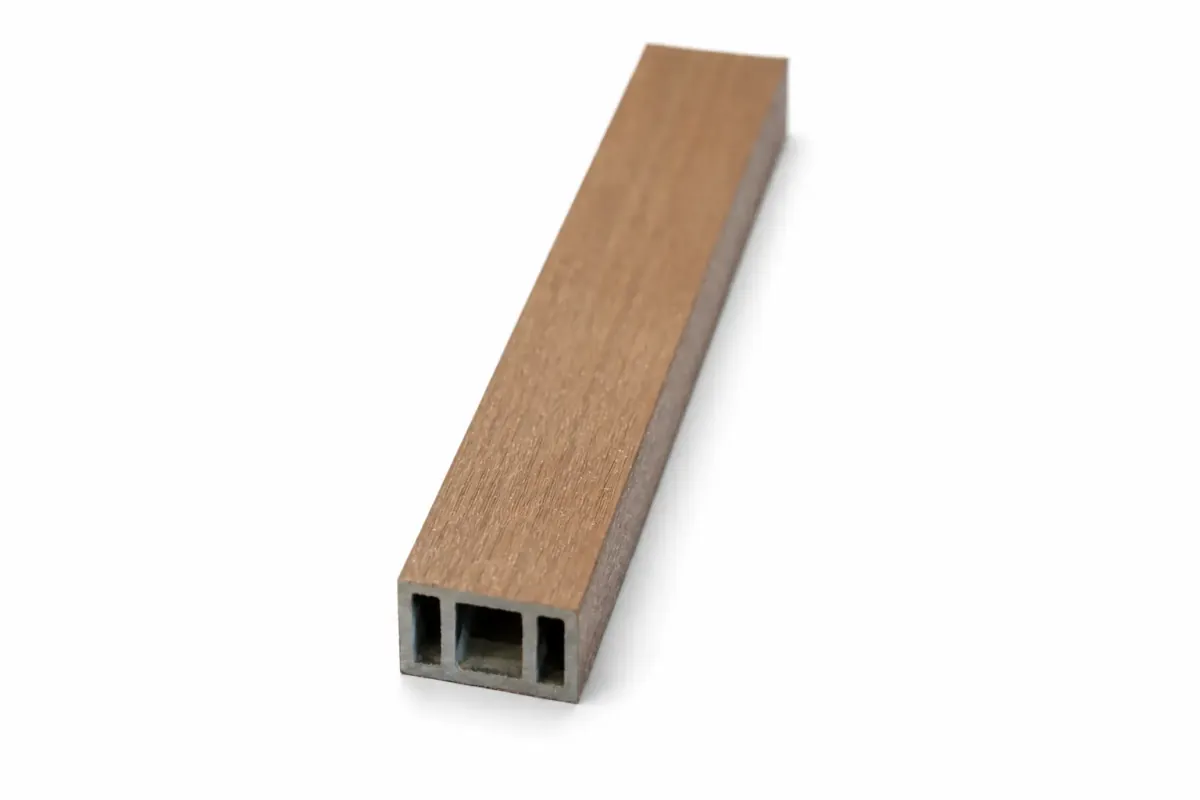
100 × 50 mm — the substantial section
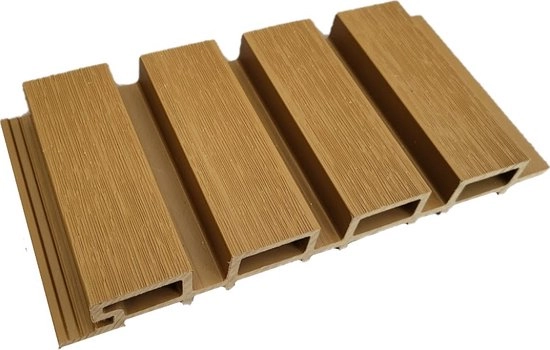
It takes on an architectural presence. This is the choice for a brise-soleil, a boundary fence and a pergola frame. At close spacing, it almost completely closes the view.
Being heavier, it needs a frame sized accordingly.
See our composite tube range.
Installation: what holds, what bends
The two methods
Between U-profiles fixed top and bottom: the tubes slide into them and the spacing is set with gauges. This is the cleanest method visually, with no visible fixings.
Side screwing onto a frame of uprights: quicker, cheaper, but the fixings show.
The stiffener rule
This is the decisive technical point. A hollow 3 m tube with no restraint at mid-height can take a slight bow under the combined effect of wind and thermal movement.
Above 1.80 m in height, add an intermediate restraint. On an exposed terrace or a Casablanca rooftop, where the westerly is steady, apply that rule without exception.
Wind loading
A screen is not a wall: it lets air through, which considerably reduces the forces on the structure. That is a major advantage over a solid fence, which acts as a sail and whose posts have to be markedly heavier.
But the tighter you close the spacing, the closer you get to a solid wall. At 20 mm spacing, size the frame as you would for a solid fence.
The uses that work
Dividing terraces from a neighbour. The primary use. Height 1.60 to 1.80 m, spacing 25 to 30 mm.
A filter in front of a west-facing window. Wide spacing — 60 to 80 mm — run vertically. You cut the low late-afternoon sun without losing the view or the light.
A pergola frame. Tubes dropping down the sides partly enclose a pergola and create an outdoor room.
Concealment. Hiding an air-conditioning unit, a pool pump or the bins. It is a modest use but an extremely common one, and the result changes the whole look of a courtyard.
A fence on a low wall. A 100 × 50 section on a low wall, for a boundary that does not feel like a prison.
Composite or the alternatives
| Natural timber | Aluminium | WPC composite | |
|---|---|---|---|
| Upkeep | Annual staining | None | None |
| Resistance to salt | Medium | Good (if powder-coated) | Excellent |
| Warmth of the result | Very high | Low | High |
| Distortion | Real | None | Low |
| Cost | Moderate | High | Moderate |
Composite sits exactly where you would expect: the warmth of timber, the peace of mind of aluminium. That is especially true by the sea, where timber degrades quickly and poorly coated aluminium pits.
The details that make the difference
End caps. A hollow tube left open collects water and houses insects. Caps or a U-profile capping: it costs little and it changes how finished the job looks.
The top profile. A clean top line, set out with a laser, is what gives a screen its perceived quality. Take the time to set it.
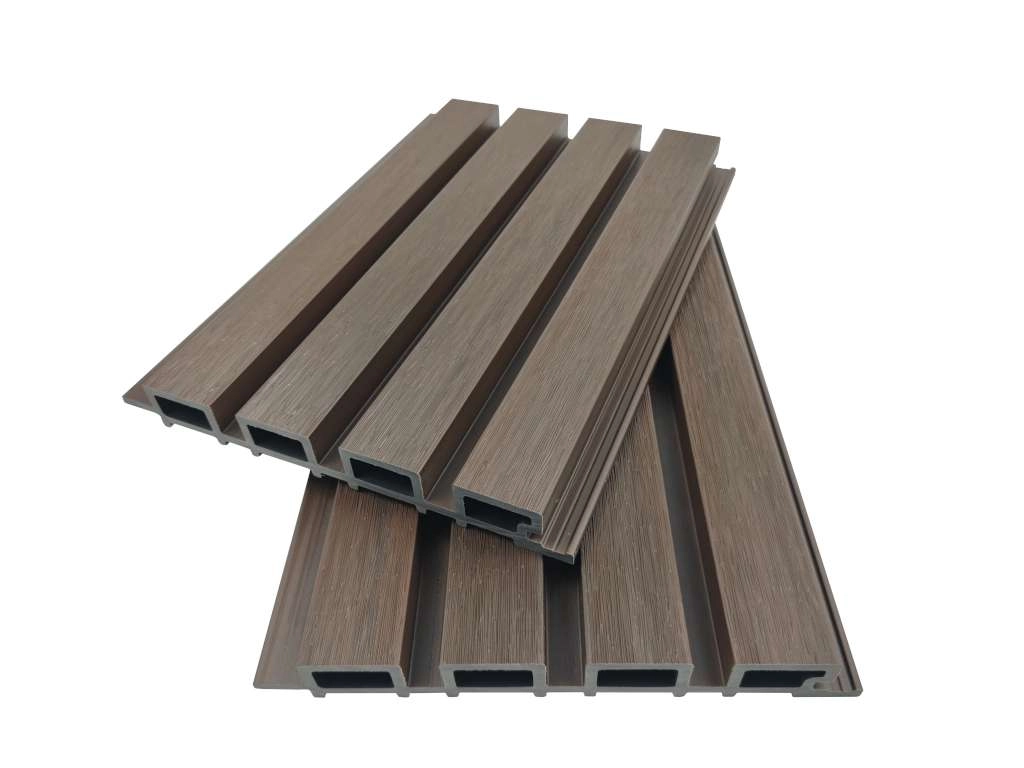
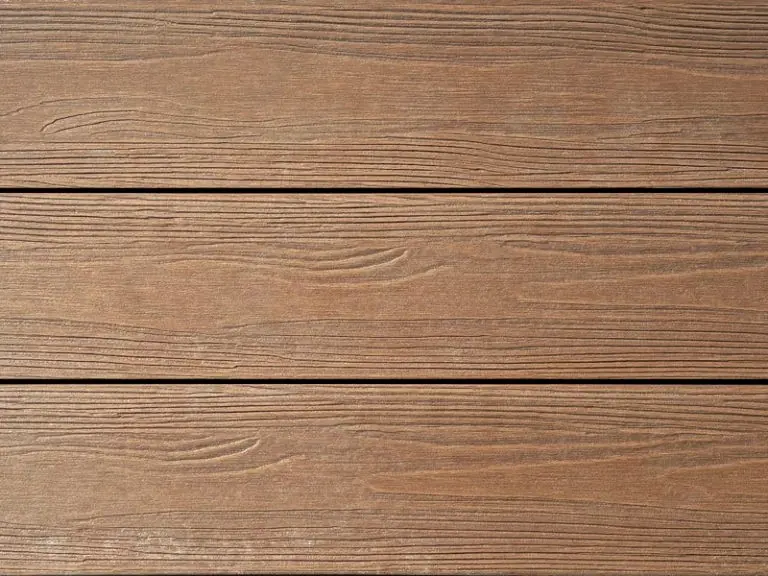
Matching the shades. Our Teak and Walnut tubes pick up exactly the shades of our decking boards and our cladding. A screen in the same shade as the deck it borders reads as coherent immediately.
A regulatory note
The heights of fences and dividers come under municipal planning regulations and, in a development or a condominium, under the deed of covenants.
Before starting work, check with your municipality or your managing agent. It is a quick step that avoids an expensive correction later.
Getting your screen costed
Tell us the length to be covered, the height you want, the substrate available — low wall, slab, existing posts — and the degree of screening you are after.
We work out the number of tubes, the optimal spacing and the frame required, and you get the costing within 24 working hours.