
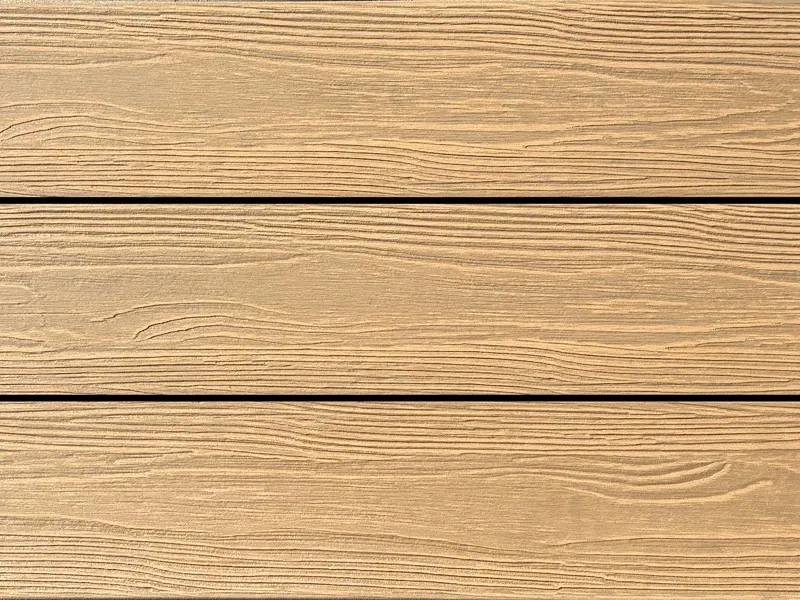
 3100 × 140 × 22 mm
 Composite decking boards
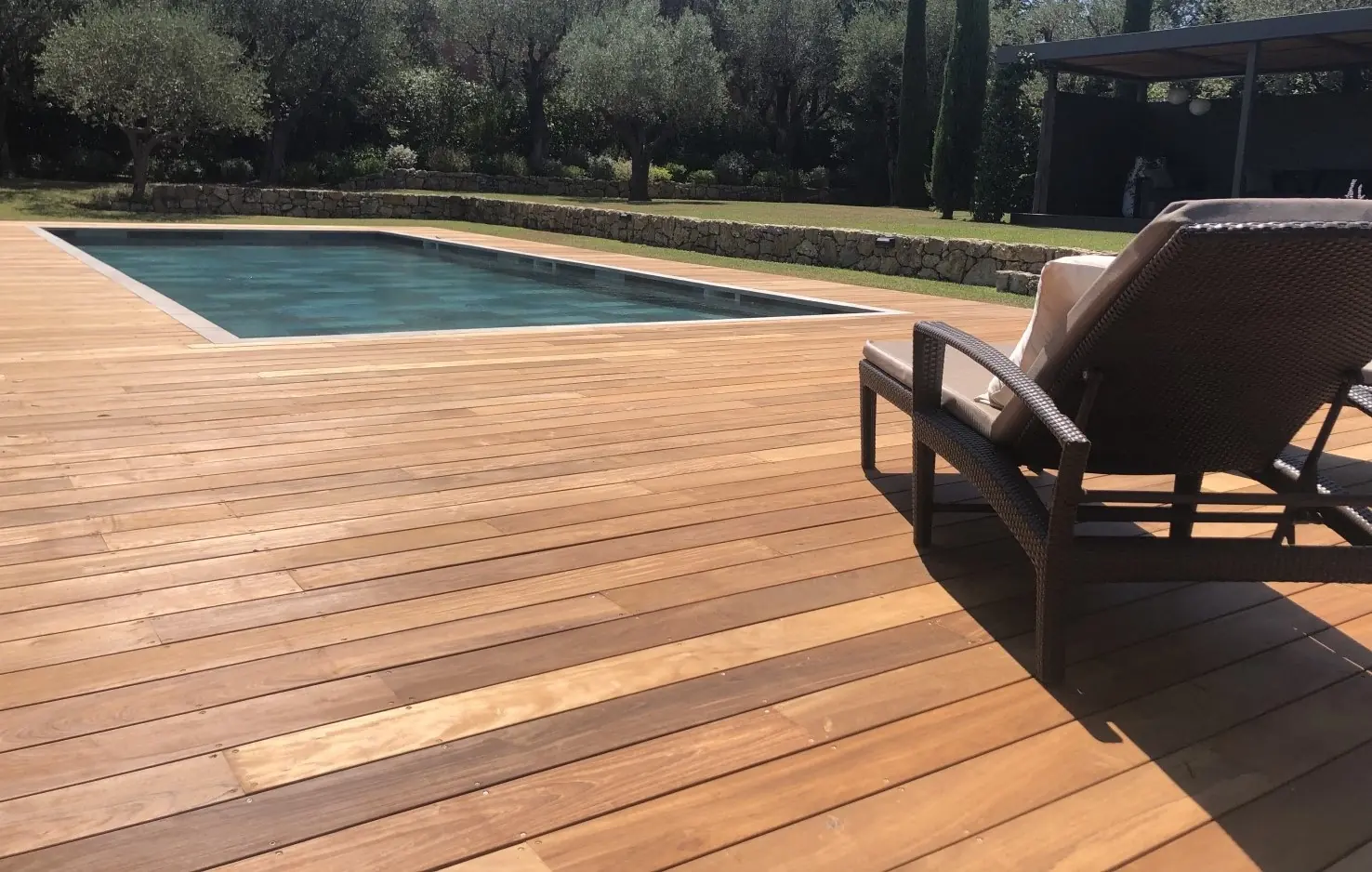
Outdoor
The floor of your outdoor space: reversible, slip-resistant, splinter-free, and still holding its shade after ten Moroccan summers.
3100 × 140 × 22 mm Composite decking boards
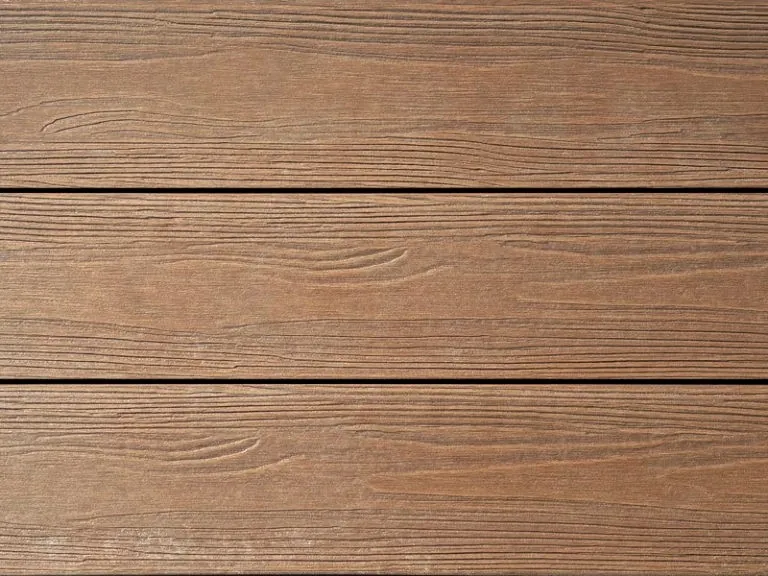 3100 × 140 × 22 mm
 Composite decking boards
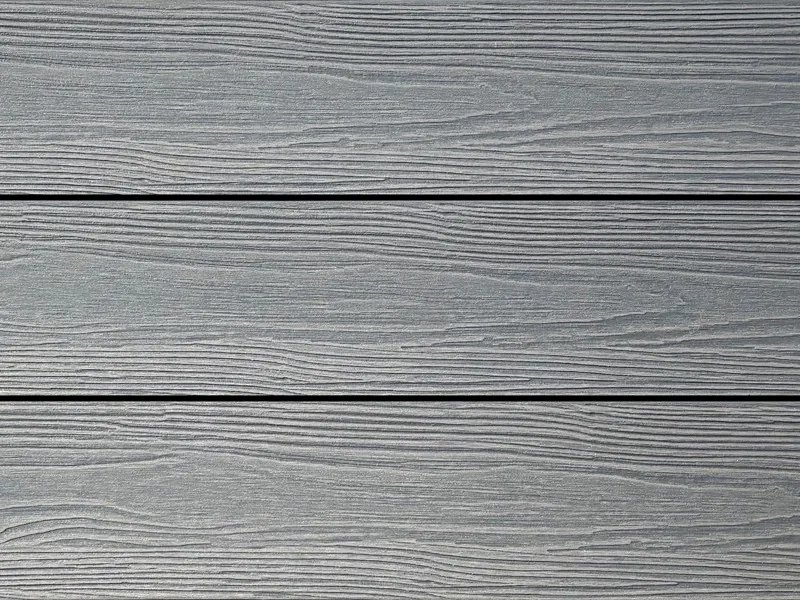 3100 × 140 × 22 mm
 Composite decking boards
 3100 × 140 × 22 mm
 Composite decking boards
Two patterns on one board: you settle the look at installation, not at the order stage.
A thickness that allows 50 cm joist centres and takes heavy furniture without flexing.
A long board limits end joints and speeds up installation noticeably.
The grooved face keeps its grip when wet — the deciding criterion around a pool.
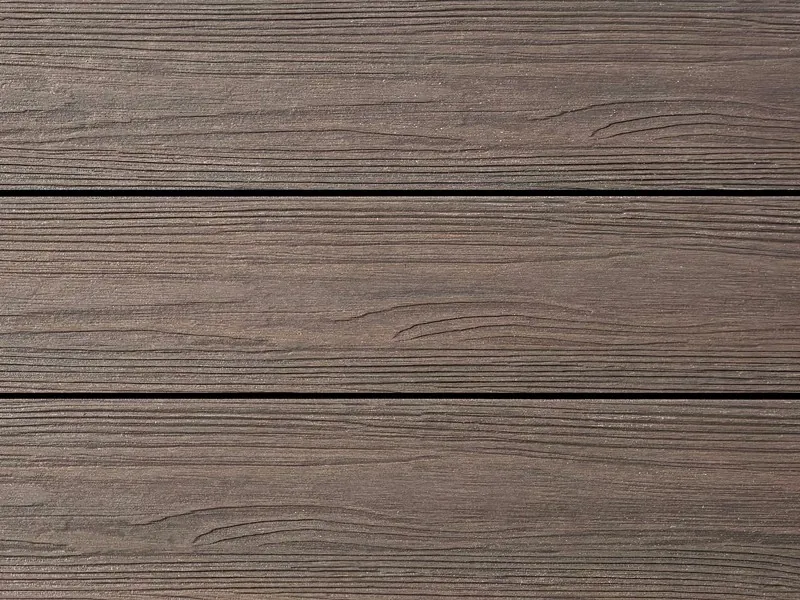
Composite decking boards are where most of our customers start — and often what convinces them. At 3100 × 140 × 22 mm and double-sided, a board covers a large area with few cuts and offers two patterns in a single product: finely grooved on one face, wood grain on the other.
Ipé-G takes the deep reddish brown of exotic hardwoods: the shade of classic terraces and poolsides. Teak-G leans golden honey, lighter, more Mediterranean, and stays comfortable underfoot. Walnut-G brings a warm walnut brown that sits well under a pergola. Dark Grey-G adds a contemporary anthracite that hides dust and frames white architecture nicely.
A 140 mm board laid with a 5 mm expansion gap covers 0.145 linear metres of width. For a 30 m² terrace, allow roughly 207 linear metres of board — about 67 boards of 3.10 m — plus 7 to 10 % for offcuts depending on the geometry. Add the joists: one every 40 to 50 cm, running perpendicular to the boards.
We do that calculation for you from a simple dimensioned plan or even a freehand sketch. It costs nothing and it avoids the catch-up order that ends up paying for shipping twice.
A composite terrace that ages badly is almost always a badly structured one. The rules are short: joists at 40 to 50 cm centres; a drainage fall of at least 1 % along the length; 5 mm between boards and 10 mm at the ends; at least 20 mm between the last board and a wall; A2 stainless screws or fixing clips; free ventilation under the terrace, and never backfill in contact with it.
The other range
Marble-effect SPC panels and decorative slat boards