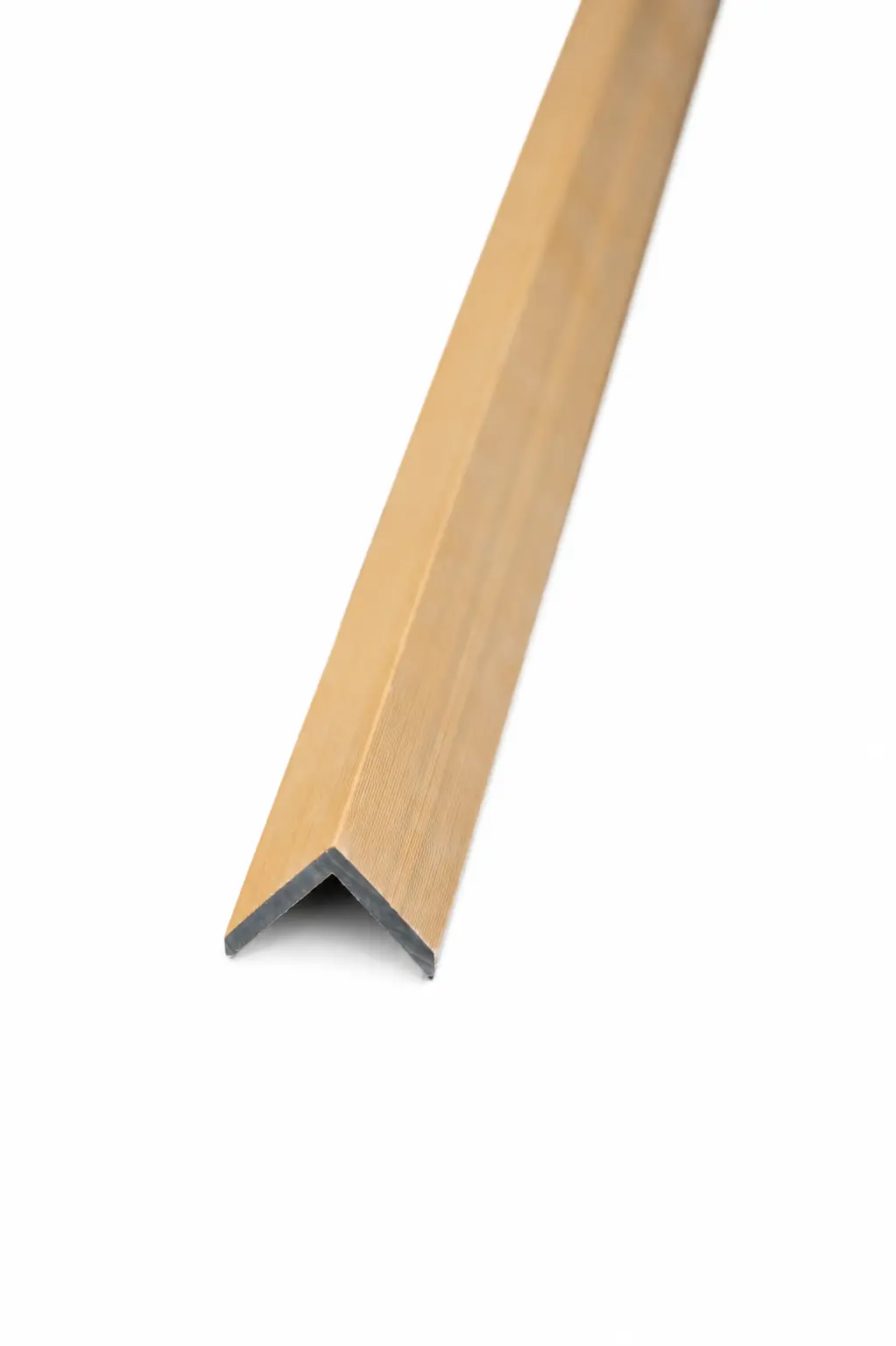
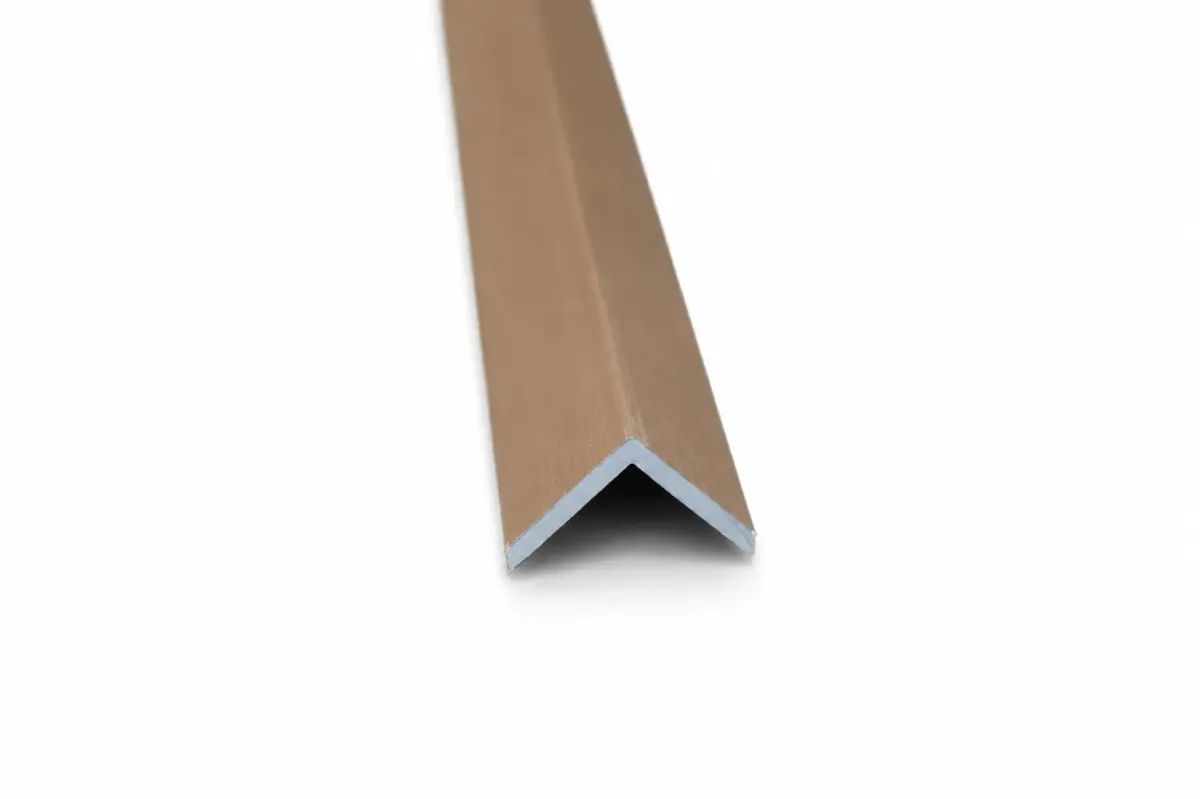
 2900 × 50 × 50 mm
 Corner trims
Outdoor
The angle that closes a corner, hides a cut and gives a project its finished look.
A leg wide enough to cover the edge of a 22 mm board and its joist.
A one-piece angle: no mitre to cut, no joint to open up.
Shades identical to the decking boards and cladding: the trim goes unnoticed.
A length that covers most edges in one piece, with no visible joint.
On a terrace or a cladding run, it is the corners that give away the quality of the work. A botched mitre, a bare board edge, a visible screw at the rim: it all shows. The composite corner trim, an L-profile of 50 × 50 mm over 2.90 m, settles all three at once.
At a terrace edge, it hides the cut edge of the boards and the void beneath, making the whole thing read as a solid deck. On an external cladding corner, it avoids the mitre — a delicate cut that opens up with expansion — and gives a clean junction between two faces. As a step or slab-nose trim, it protects the edge most exposed to knocks.
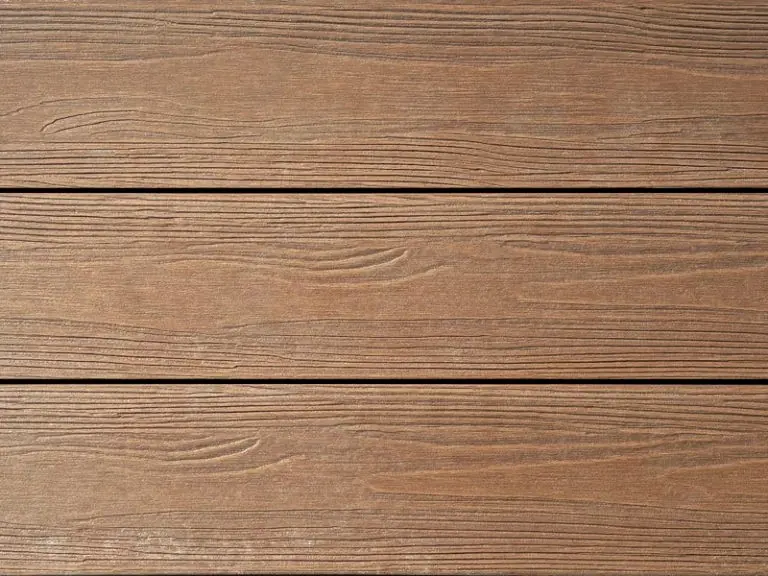
Available in Teak and Walnut, in the exact shades of our decking boards and cladding. That is the point of the product: a trim that disappears visually instead of announcing the junction.
Stainless screws every 40 to 50 cm, pre-drilled to avoid splitting at the ends of the profile. Leave 3 mm between two trims fitted end to end, and never trap a trim between two fixed points without an expansion gap.
The other range
Marble-effect SPC panels and decorative slat boards