Composite wood or exotic hardwood: which to choose for a deck in Morocco?
Ipe, teak or WPC composite: an honest comparison for a deck in Morocco. How each holds up in the sun, real upkeep, ten-year cost and the cases where timber is still right.
It is the question we hear most often in the showroom, and it deserves better than a sales answer. We sell composite, and we are still going to tell you when exotic hardwood remains the right choice.
The heart of the matter: the Moroccan climate
An exotic hardwood — ipe, cumaru, teak, padauk — is a living natural material. It absorbs moisture, gives it back, and moves. In a temperate, rainy climate, that cycle is slow and steady.
In Morocco it is brutal. A deck in Marrakech takes 45 °C at the surface in the afternoon and drops back to 15 °C at night. A deck in Tangier takes salt air continuously. What that alternation produces is well known: greying within two summers, shrinkage splits at the surface, splinters after three years, and an oil to reapply every spring if you want to keep the original shade.
WPC composite does not go through that cycle because it does not absorb water. That is the whole argument, and it is a climate argument before it is a product argument.
The comparison, line by line
| Exotic hardwood | WPC composite | |
|---|---|---|
| Look when new | Excellent, natural variation | Very good, more regular |
| Look at 5 years with no upkeep | Silver grey, splits | Almost as it started |
| Oiling / staining | Annual | None |
| Sanding | Every 3 – 4 years | None |
| Splinters | Appear over time | Never |
| Wet grip | Variable, becomes slippery | Good on the grooved face |
| Vulnerability to insects | Real, depending on species | None |
| By the sea | Accelerated deterioration | Holds up very well |
| Local repair | Sanding possible | Board replacement |
| Heat in full sun | High on dark shades | High on dark shades |
What the table does not say
An exotic hardwood maintained every year, sanded every three years and oiled with a quality product still looks superb at ten years. The problem is not the material: it is that almost nobody does it. The annual upkeep of a 40 m² deck is a day’s work, every spring, indefinitely.
Composite is not “better” in the abstract. It is better matched to how decks are actually used: a terrace you want to use and do not want to maintain.
The real ten-year cost
This is where the comparison genuinely tips, and it is simple to work out.
For exotic hardwood, add up over ten years: the initial purchase, ten applications of oil (product plus time), two or three sandings, and the replacement of boards that have split or broken out around the screws.
For composite, add up: the initial purchase, and a little soap.
The price gap at purchase, often modest to start with, is generally absorbed between the fourth and the sixth year. Our guide to the price of a composite deck in Morocco sets out the initial budget line by line.
The three cases where timber is still the better choice
We do not recommend composite across the board. Three situations still justify timber:
A heritage building or a strict architectural brief. A riad in the medina, a listed house, a project where the authenticity of the material is part of the specification. Composite is convincing, but it is not wood.
A covered, sheltered terrace. Under an enclosed pergola, out of the rain and direct sun, exotic hardwood ages far better and the upkeep gap narrows considerably.
An owner who enjoys the maintenance. Some customers like sanding and oiling their deck in spring. That is a perfectly legitimate relationship with a material, and in that case timber gives satisfactions composite will not.
The false friends: cheap composite and “treated” timber
Two traps come up often on the Moroccan market.
Hollow, lightweight composite, sold very cheaply. It sags between the joists, sounds hollow underfoot, and its surface pigments give up after the first summer. The only reliable indicator is weight per linear metre: ask for it every time, it is the figure hardest to dress up.
Pressure-treated pine, presented as the economical alternative. It holds up reasonably for a few years, but it distorts, it splits, and the treatment does not remove the need for surface upkeep. On an exposed terrace, it is a short-term saving.
How to decide, in three questions
Will you actually maintain the deck every spring? If the honest answer is no, composite is the obvious call.
Is the deck in direct sun and sea spray? If so, the gap in durability between the two materials opens very quickly in favour of composite.
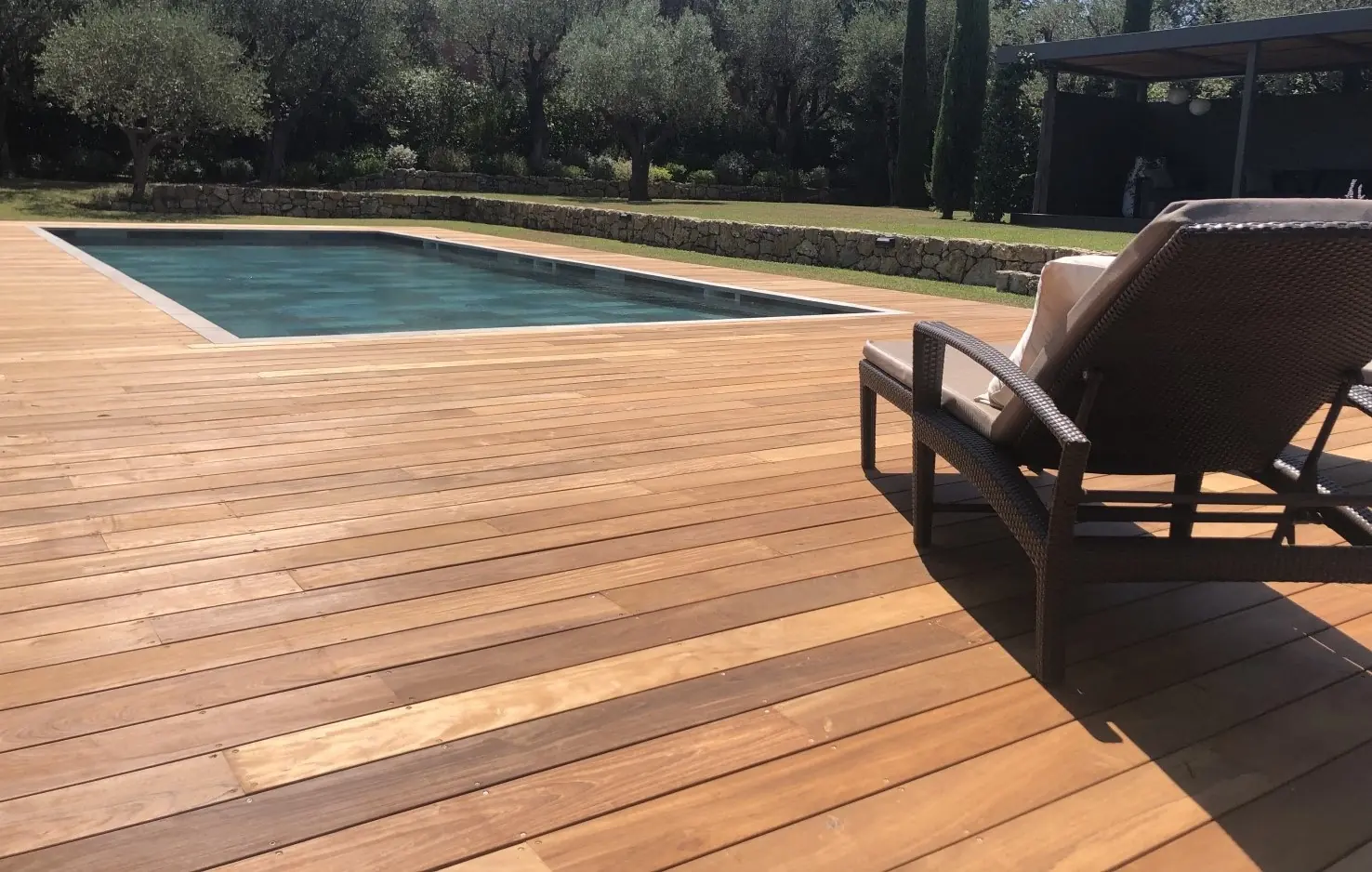
Do you walk on it barefoot? Around a pool, the absence of splinters and the wet grip of the grooved face make a concrete daily difference.
See both before you decide
No comparison table replaces contact with the material. Our composite decking boards are displayed at full size in our Casablanca showroom, laid the way they would be on site — with the substructure, the expansion gaps and the edge trim.
Bring an offcut of your current timber if you have one: the side-by-side comparison, in daylight, generally settles the question in five minutes.
From the theory to the site
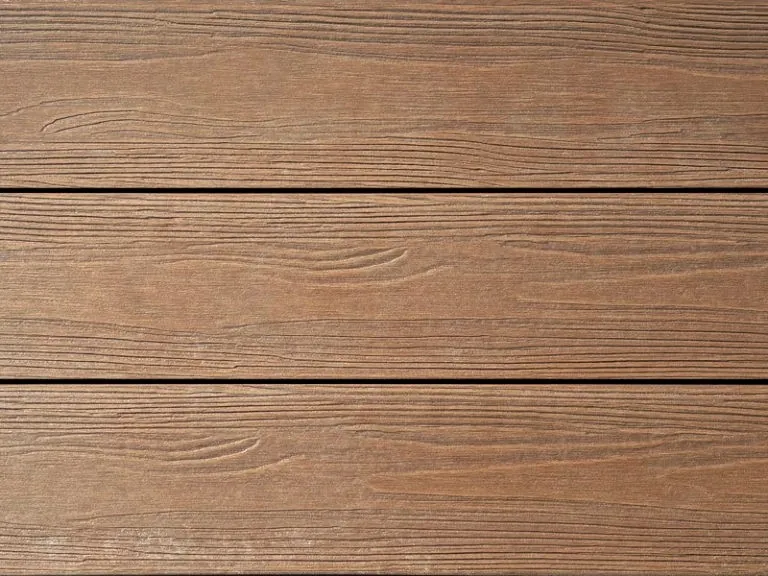 3100 × 140 × 22 mm
 Composite decking boards
Double-Sided Composite Decking Board — IPE-G
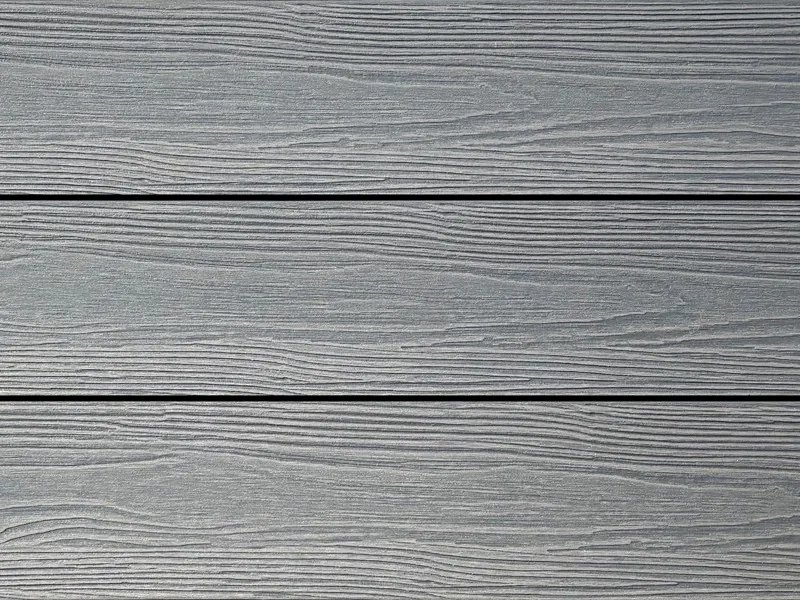 3100 × 140 × 22 mm
 Composite decking boards
Double-Sided Composite Decking Board — Dark Grey-G
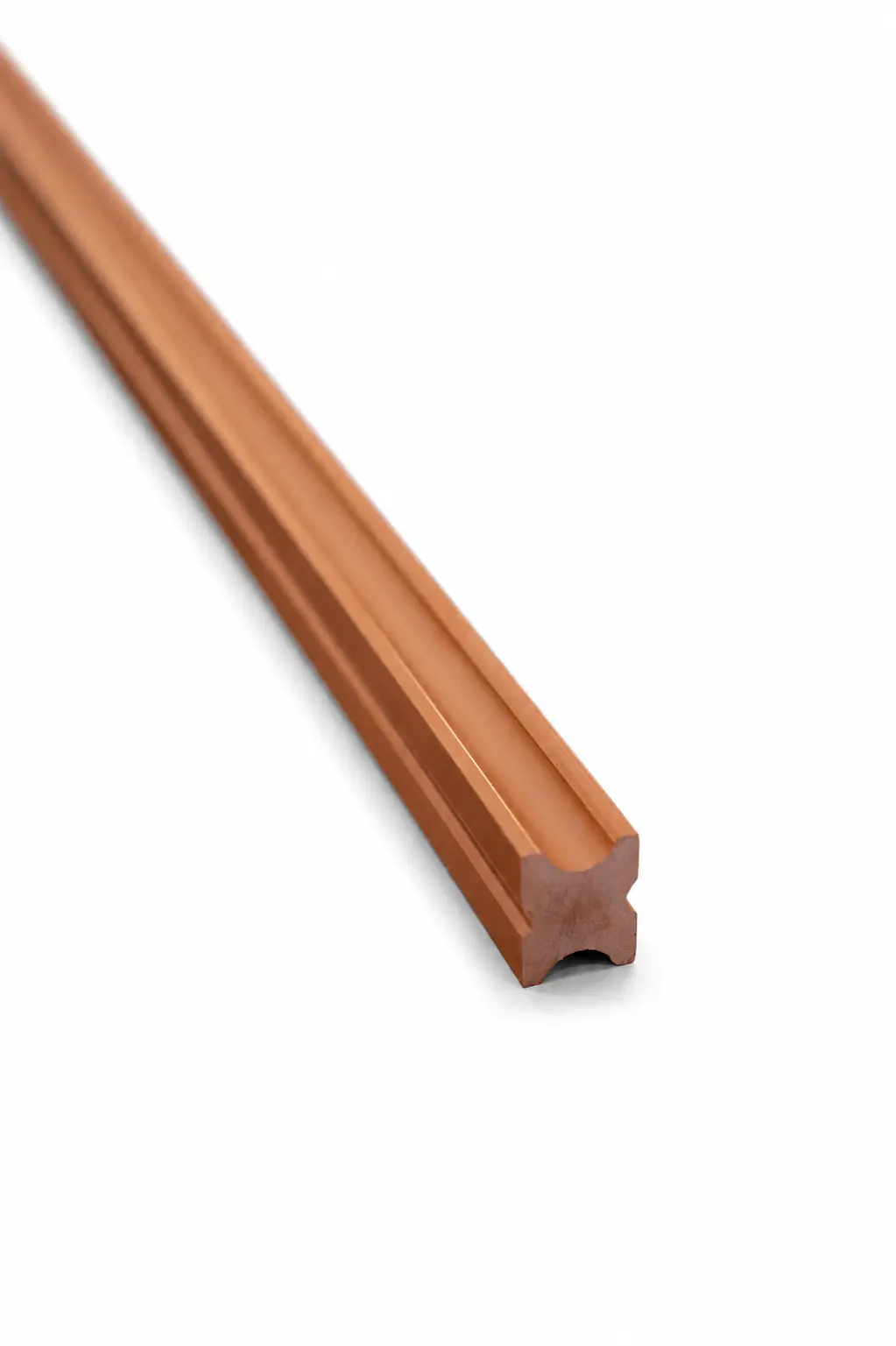 3100 × 40 × 30 mm
 Joists & accessories