Marble-effect wall panels: the complete guide to SPC for your walls
Everything about marble-effect SPC wall panels: composition, formats, bonded installation, wet rooms, cutting and upkeep. The guide to dressing a wall in Morocco with no building work.
Until recently, getting a marble wall meant: a stonemason, heavy slabs, a reinforced substrate, a team of three and a substantial budget. The SPC wall panel has changed that equation — and it is the product that surprises visitors to our showroom the most.
What SPC actually is
SPC stands for Stone Plastic Composite. The structure has three layers:
- a rigid core filled with limestone powder, which gives the density and the dimensional stability;
- a high-definition decor film, which carries the veining;
- a clear wear layer, which protects the decor from scratches and soiling.
That composition is what separates SPC from a conventional hollow PVC panel: it does not distort with heat, it does not dent under a point load, and it allows formats of 2900 × 1220 mm with no rippling.
The large format changes everything
A standard living-room wall is 2.70 to 2.90 m high. With a 2900 mm panel, you cover that height with no horizontal joint. That is what produces the illusion: a solid stone slab has no horizontal joint, whereas tiling has one every 60 or 120 cm.
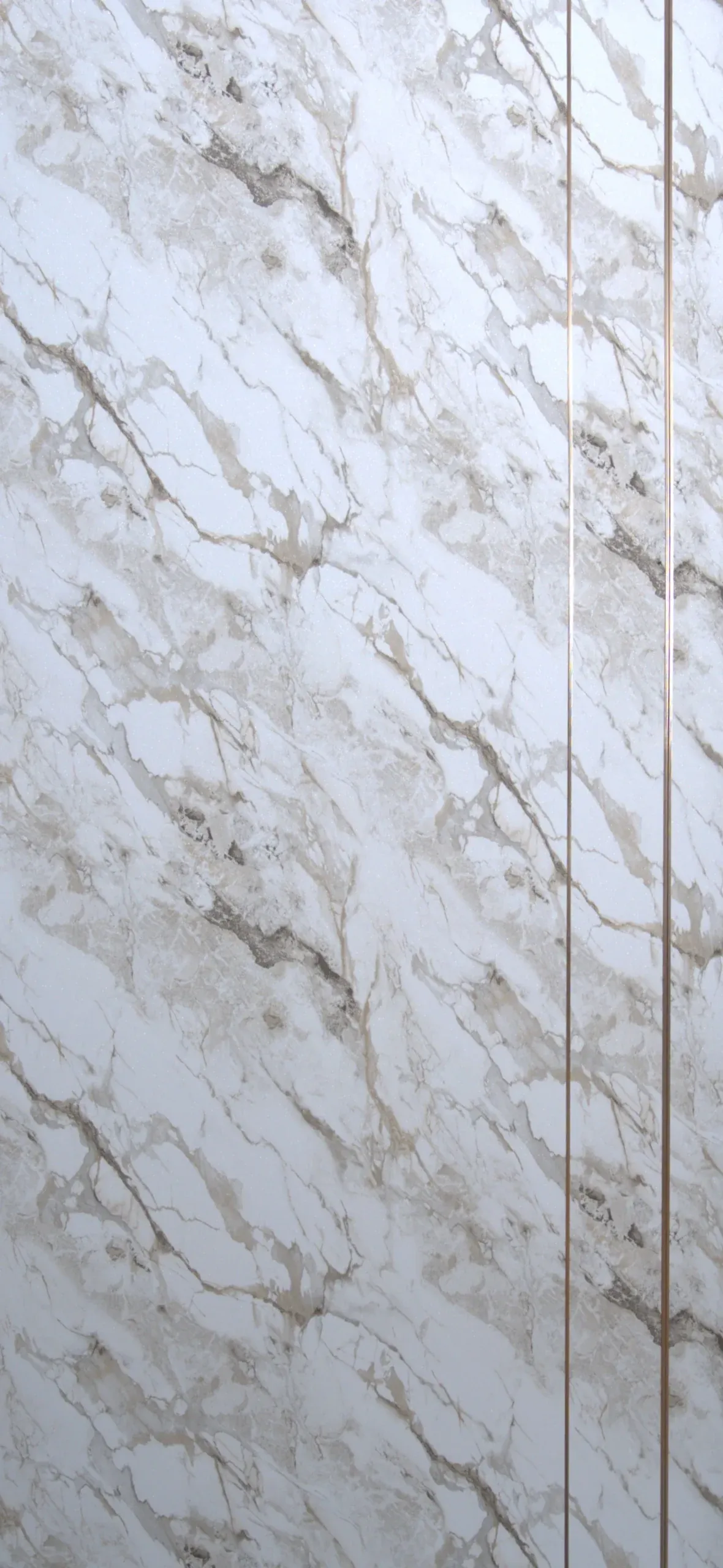
The only visible joints are vertical, every 1.20 m. Treated with a fine aluminium profile or a matching silicone, they read like the setting-out joints of a real stone facing.
The finishes and what they are for
The marbles
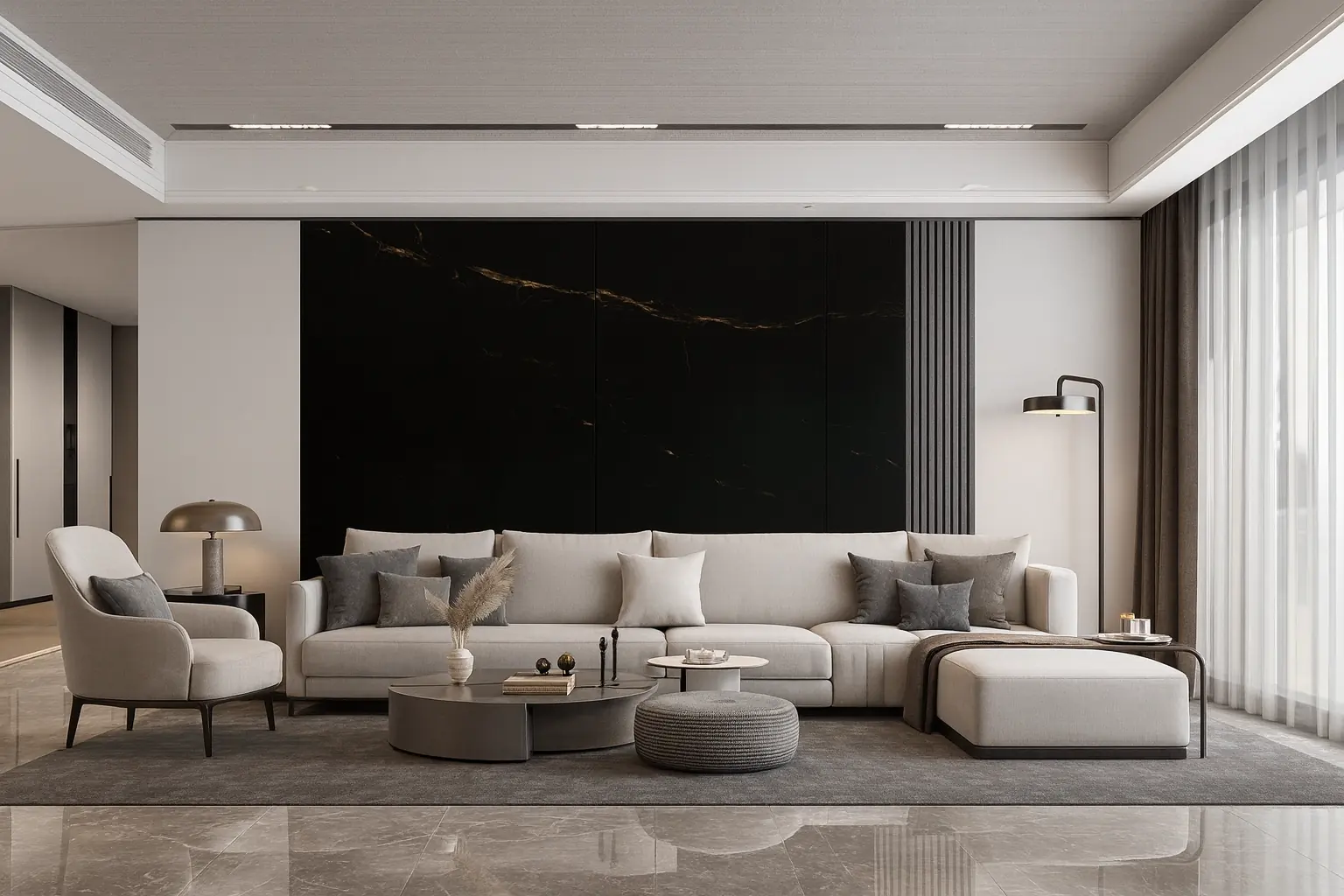
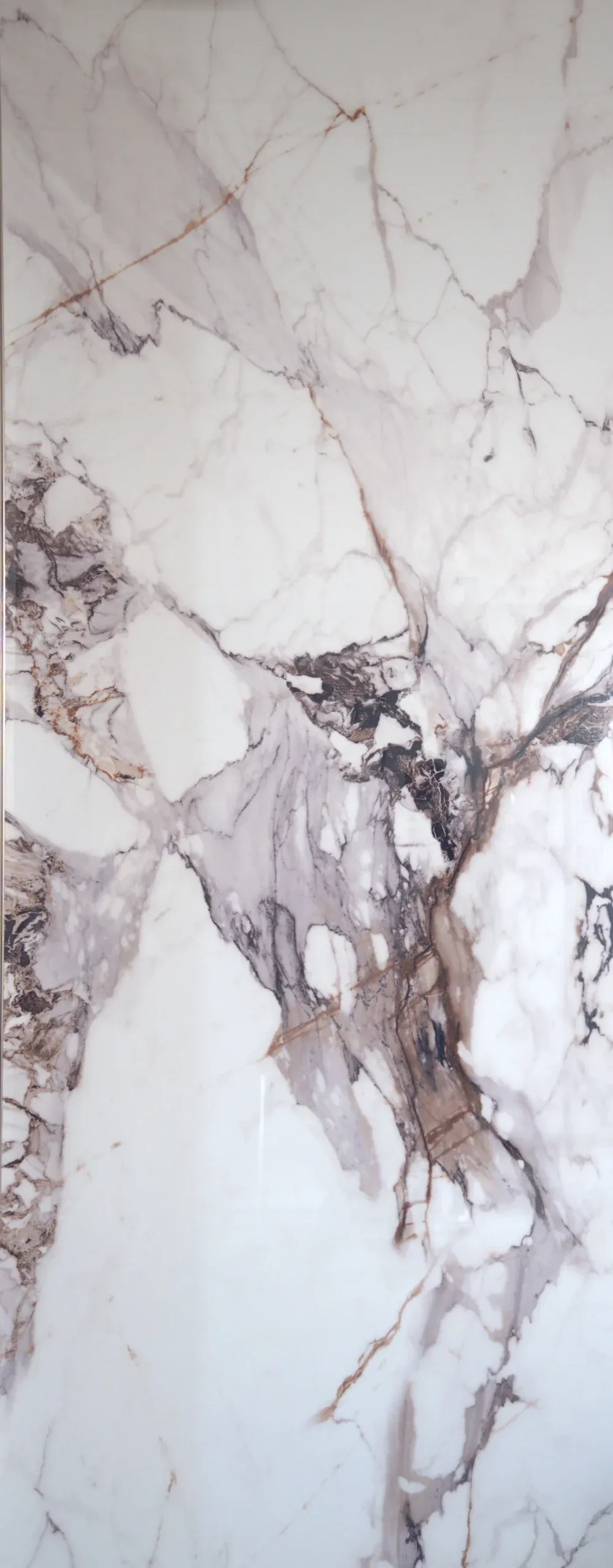
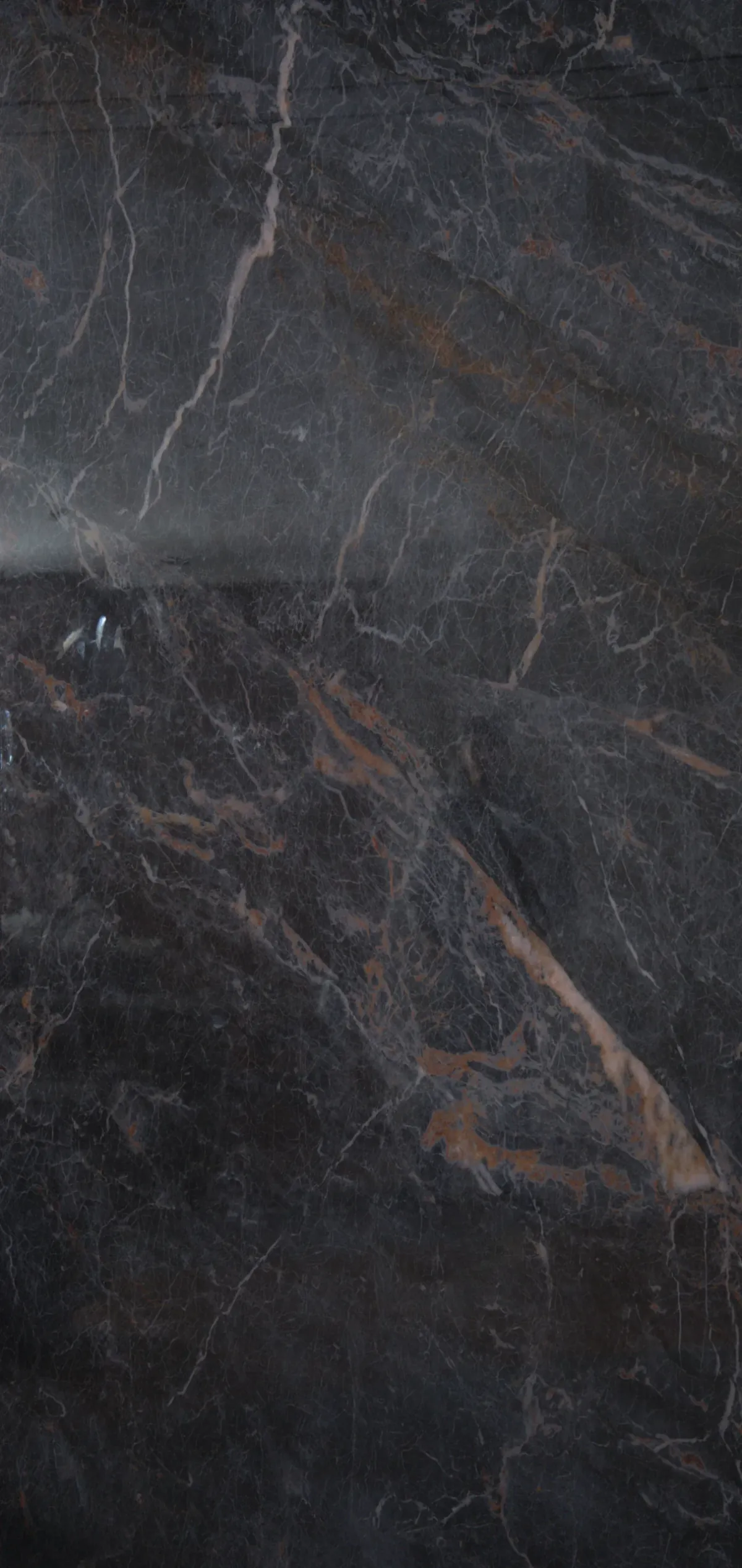
This is the heart of the range. Calacatta Gold (PT073) is the classic: a white ground, gold and grey veining, very bright — it works as a headboard and as a living-room backdrop. Black with coppery veins (SS002) and black with orange and red veins (SS009) are far more dramatic: keep them for an accent wall, behind a sofa or a reception counter.
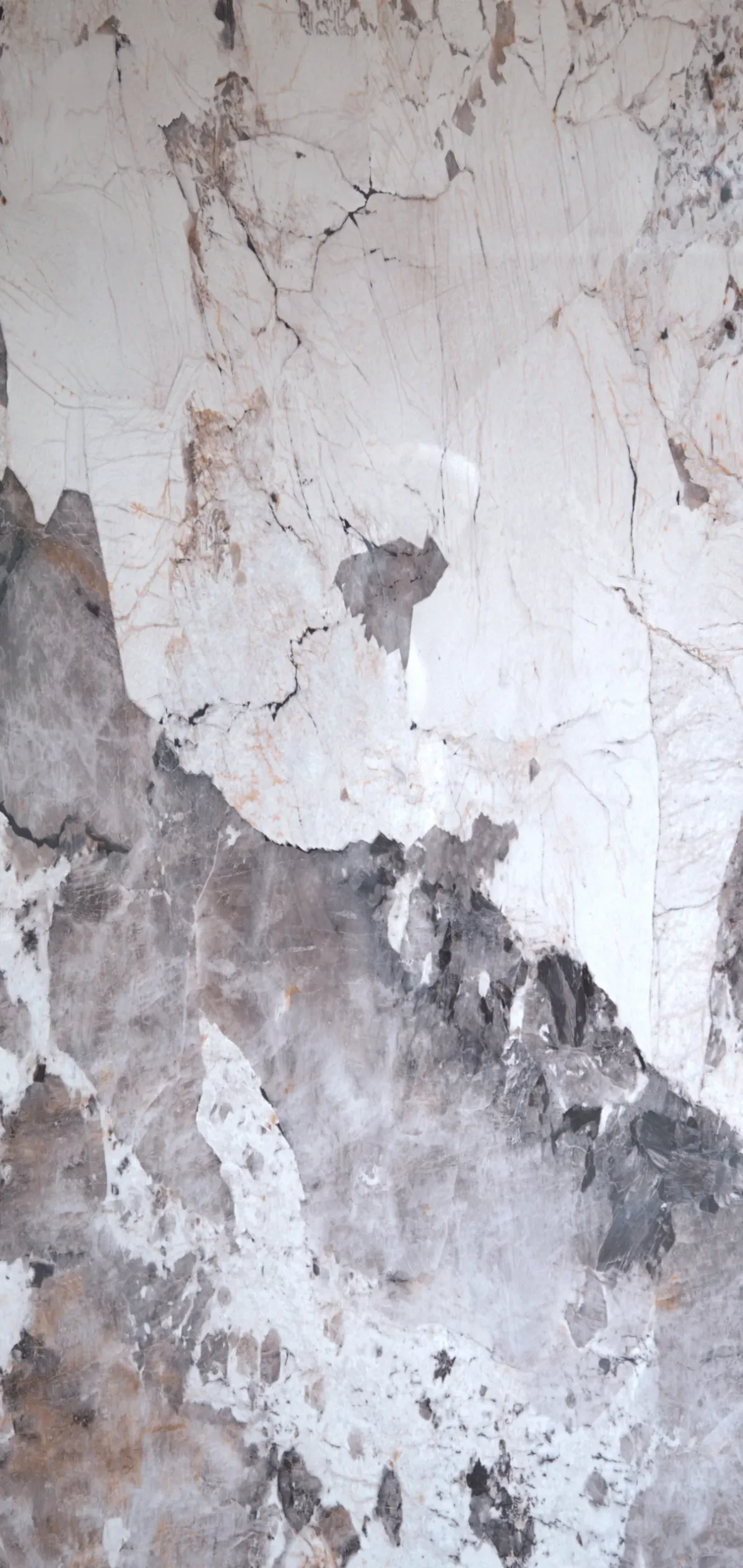
White with grey clouding and black veining (SS014) is the most versatile, and white with gold grooves (ST-09) adds a fine relief that catches the light.
The matt plains
Glacier white, off-white, taupe grey, silver grey. They are not after an effect: they serve as a neutral ground, they pair with decorative slats, and they calm a room where the accent wall is already busy.
The wood effects
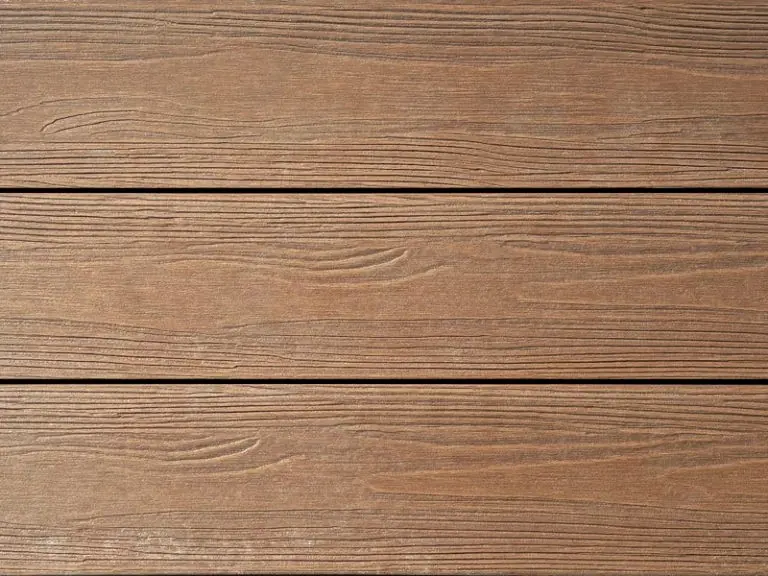
WD-14 imitates timber without the relief, and WDG-16 adds gold grooves. They suit projects that want the warmth of wood with the upkeep of a closed surface — a kitchen splashback, for instance.
All these finishes can be seen in our SPC wall panel range.
Installation, step by step
Check the substrate
This is the point to watch. An SPC panel is rigid: it does not follow the defects of a wall, it reveals them in raking light.
Hold a 2 m straightedge against the wall. If the maximum gap exceeds 5 mm, do not bond directly: build a batten frame, plumb it with shims, and screw or bond the panels to it.
The substrate must also be dry, clean and degreased. On tiling, a household degreaser is enough. On flaking paint, strip back the loose areas.
Bonding
MS polymer adhesive in vertical beads every 20 to 30 cm, plus dabs around the perimeter. Offer the panel up, press it on, pull it back 2 cm immediately to let the adhesive air for a minute or two, then reposition and press home.
Allow for props or supports while it cures if the panels are tall.
Treating the joints and corners
Three options, depending on the look you want:
- an aluminium profile, H or U section, for a crisp, deliberate joint;
- matching silicone, for a near-invisible joint;
- a dry butt joint, where the veining lines up.
In a wet room, sanitary silicone is mandatory in the corners and at the foot of the wall.
Cutting and drilling
Circular saw with a fine-tooth blade, decor face down to avoid chipping. For socket and switch outlets, a standard hole saw works perfectly — drill at moderate speed, without forcing.
SPC, tiling or paint: making the call
| Paint | Tiling | SPC panel | |
|---|---|---|---|
| Time on site (15 m²) | 2 – 3 days | 3 – 5 days | 1 day |
| Dust and rubble | Little | Considerable | Almost none |
| Grout to maintain | — | Yes | No |
| Wet room | Limited | Yes | Yes |
| Removing what is there | Sometimes | Often | Rarely |
| Stone / marble effect | No | Depends on product | Yes |
The decisive advantage of SPC in renovation is right there: you fit over what is already in place. No tile removal, no rubble to clear, no re-rendering. In an occupied apartment, that is often the criterion that settles it.
Upkeep
A slightly damp microfibre cloth. The surface is closed: it absorbs neither fingerprints nor cooking splashes.
Avoid abrasive powders and solvents (acetone, white spirit), which dull the wear layer irreversibly. A mild household degreaser is enough for a splashback.
Mistakes to avoid
Bonding to a wall that is out of plane. The defect will show in raking light, and it will be impossible to correct afterwards.
Neglecting the bottom joint in a wet room. Water that gets behind a panel never dries.
Fitting to a damp wall. Untreated rising damp will eventually release the adhesive. Treat the cause before covering anything.
Choosing a heavily veined decor for a whole room. A dramatic black marble is superb on one wall; on four, it becomes oppressive.
See the material for real
Photography conveys neither the depth of the veining nor the way the wear layer catches light. Our fourteen finishes are displayed at full size in our Casablanca showroom, vertically and under real lighting.
Bring a sample of your flooring or a photo of your room: the choice takes a few minutes once you see the shades side by side.
From the theory to the site
 2900 × 1200 × 8 mm
 SPC wall panels
Calacatta Gold Marble-Effect SPC Wall Panel — Sheet Board PT073
 2900 × 1220 × 8 mm
 SPC wall panels
Black Marble-Effect SPC Wall Panel with Copper Veins — Sheet Board SS002
 2900 × 1200 × 8 mm
 SPC wall panels
White Marble-Effect SPC Wall Panel with Grey Drifts and Black Veining — Sheet Board SS014
 2900 × 1220 × 8 mm
 SPC wall panels