SPC, PVC or MDF: which material for a wall covering?
SPC, hollow PVC, veneered MDF, solid timber: the real differences between wall covering materials. Density, wet rooms, durability and recommended uses.
Behind the phrase “wall panel” sit materials that have little in common. Confusing them means risking MDF in a bathroom or hollow PVC in a large format on a 2.90 m wall. Here is what really separates them.
SPC — Stone Plastic Composite
Composition
A rigid core filled with limestone powder, a high-definition decor film, a clear wear layer. The mineral filler does everything: it provides the density, the rigidity and the dimensional stability.
What it allows
- Large formats — 2900 × 1220 mm — with no rippling or buckling
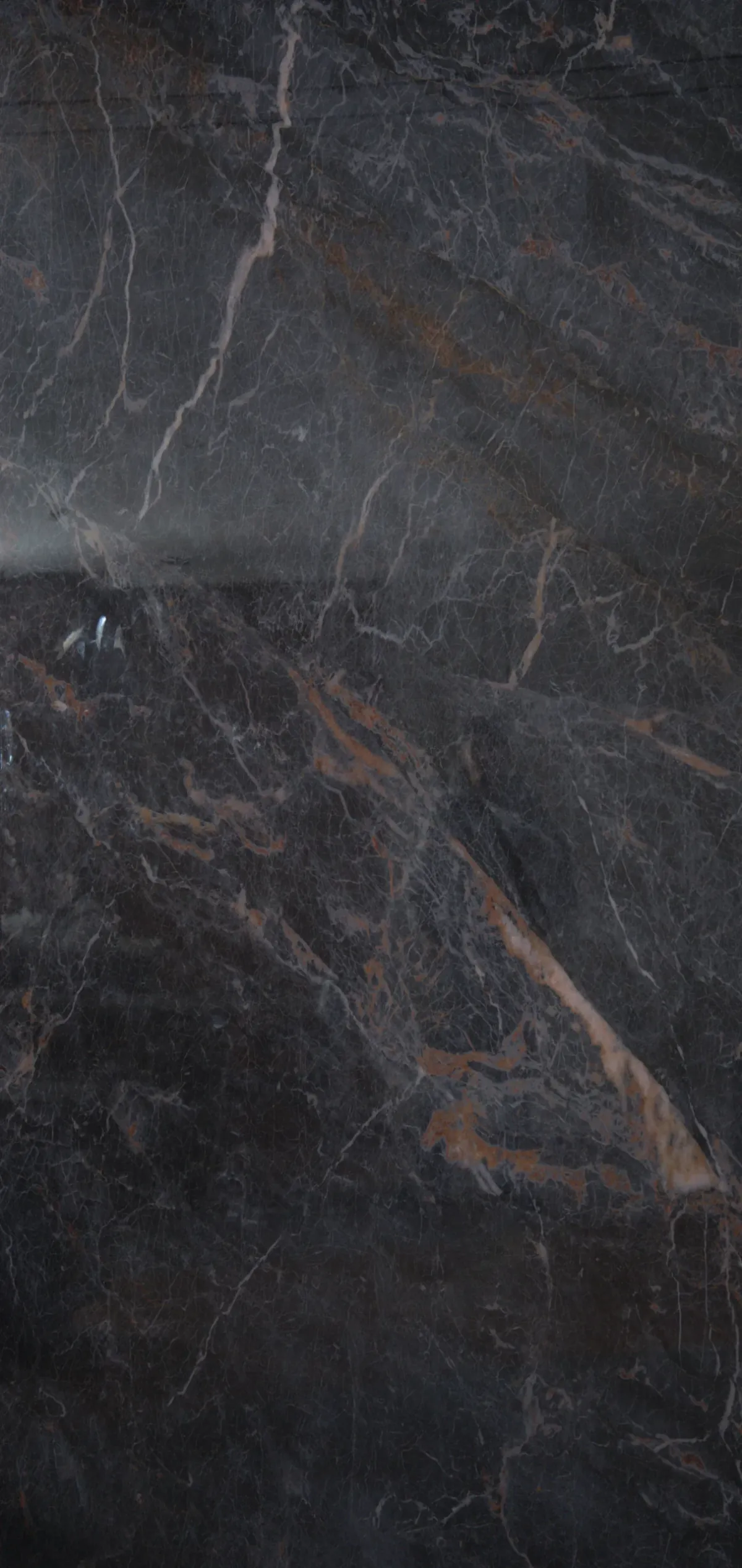
- A credible stone look: density gives the surface an optical behaviour close to marble
- Total waterproofing, suitable for wet rooms
- Thermal stability: it does not distort behind a radiator or under warm lighting
Its limits
It is heavy — handling a 3.5 m² panel takes two people. It is rigid: it will not follow a wall that is out of plane, and it reveals the defects in raking light. And it costs more than hollow PVC.
Where to use it
Living-room walls, headboards, reception backdrops, bathrooms, kitchen splashbacks. See our SPC panel range.
Decorative PVC
Composition
An extruded hollow profile, light, with a printed decor on the surface. The hollow structure lightens the material and allows complex profiles: battens, grooves, concaves, rounds.
What it allows
- Relief profiles impossible to obtain in solid material at a reasonable cost
- Installation with no machinery: it cuts with a fine saw and one person can handle it
- Indifference to ambient humidity
- A contained cost
Its limits
It dents under a strong point load — the kick of a chair leg leaves a mark. Over large flat areas, it ripples and reveals the defects. And it does not tolerate prolonged exposure to a direct heat source.
Where to use it
Where relief does the work: Slat Board slats, Grid grooved boards, concave profiles and rounded ones.
Veneered or lacquered MDF
Composition
A compressed wood-fibre panel, finished with a wood veneer or a lacquer.
Its qualities
An authentic wood result when it is veneered in a real species. Excellent machinability: it takes any moulding or cut-out. A moderate cost.
Its disqualifying problem
It swells irreversibly on contact with damp. A leak, a splash, rising damp, and the affected area is lost. Even in a moisture-resistant version, it is not a wet-room material.
Where to use it
Dry rooms only: living room, bedroom, office, dressing room. And away from any source of damp.
Solid timber
The finest, the most expensive, and the one that moves. It expands and contracts with humidity, which means leaving gaps and accepting the movement. It needs periodic maintenance.
It is a choice for exceptional cases, where the material matters more than the constraint.
The summary table
| SPC | Decorative PVC | MDF | Solid timber | |
|---|---|---|---|---|
| Density | High | Low | Medium | High |
| Wet room | Yes | Yes | No | With reservations |
| Large flat format | Yes | No | Yes | Difficult |
| Relief profiles | No | Yes | Yes | Yes |
| Impact resistance | Good | Medium | Medium | Good |
| Thermal stability | Excellent | Medium | Good | Medium |
| Weight | High | Low | Medium | High |
| Upkeep | None | None | Light | Periodic |
| Cost | Medium to high | Moderate | Moderate | High |
How to recognise quality, whatever the material
Three simple tests, all possible in a showroom:
Weight. Pick the panel up. A dense SPC is immediately recognisable; a quality PVC, light though it is, has a perceptible rigidity.
Deflection. Hold a board by one end, horizontally. A quality board barely bends. A board that sags noticeably will ripple on the wall.
The cut edge. Look at the section. On a PVC, the cells should be regular and the walls thick. On an SPC, the core should be homogeneous, with no visible porosity.
Combining materials: the good practice
The best use of these materials rarely involves choosing just one.
A composition we often recommend: a marbled SPC panel as the main wall — the smooth surface, the veining, the depth — and relief PVC boards down the sides or on the returns. The contrast between smooth and textured does all the work, and the budget stays under control since only the main wall is in SPC.
It is exactly the principle you find in well-designed hotel receptions: one fine surface that takes the eye, and a texture that accompanies it.
Come and handle the material
These differences read poorly on a datasheet and not at all in a photograph. All four families are displayed in our Casablanca showroom, at full size and fitted the way they would be in your home.
Pick the panels up: in thirty seconds, you will know what “density” means.
From the theory to the site
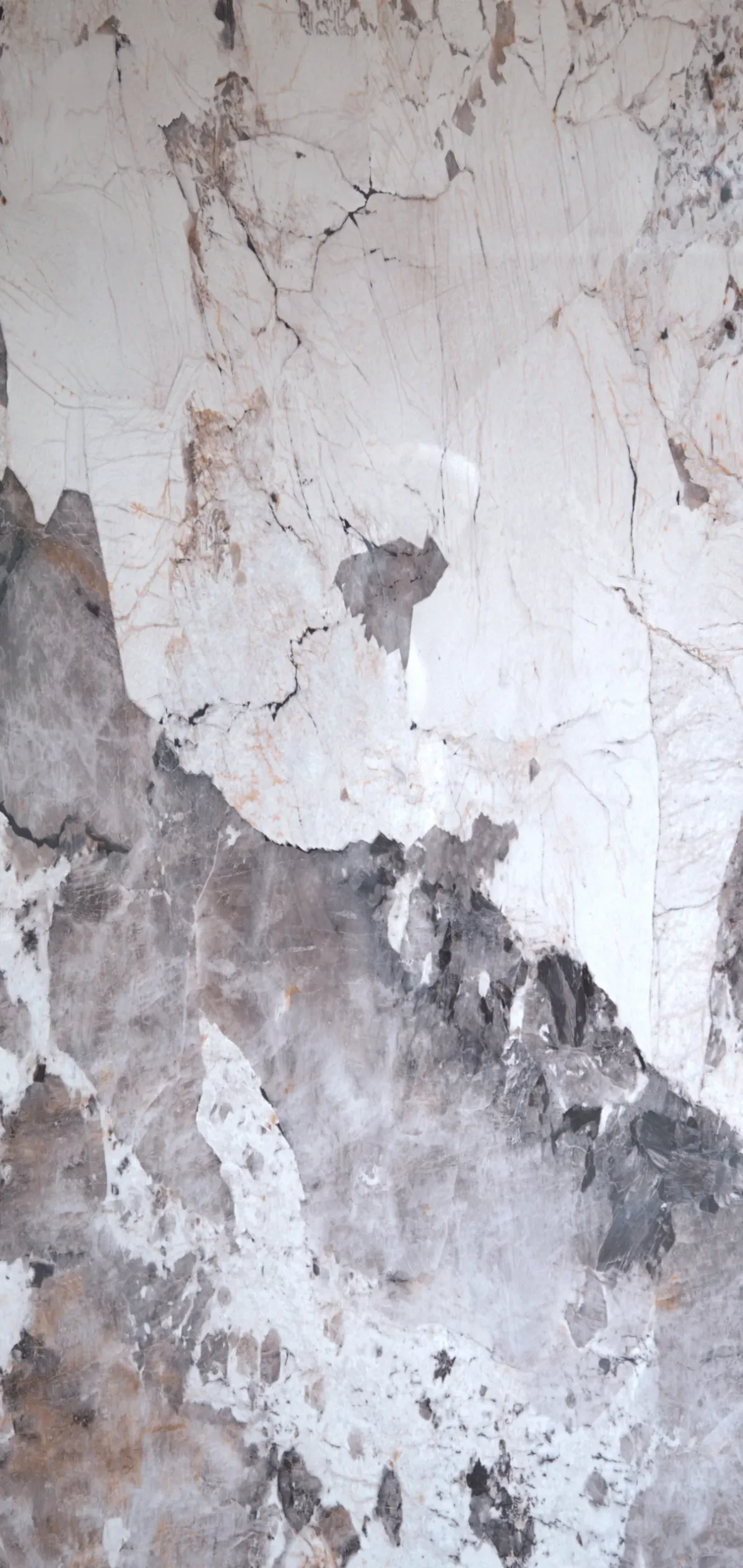 2900 × 1200 × 8 mm
 SPC wall panels
White Marble-Effect SPC Wall Panel with Grey Drifts and Black Veining — Sheet Board SS014
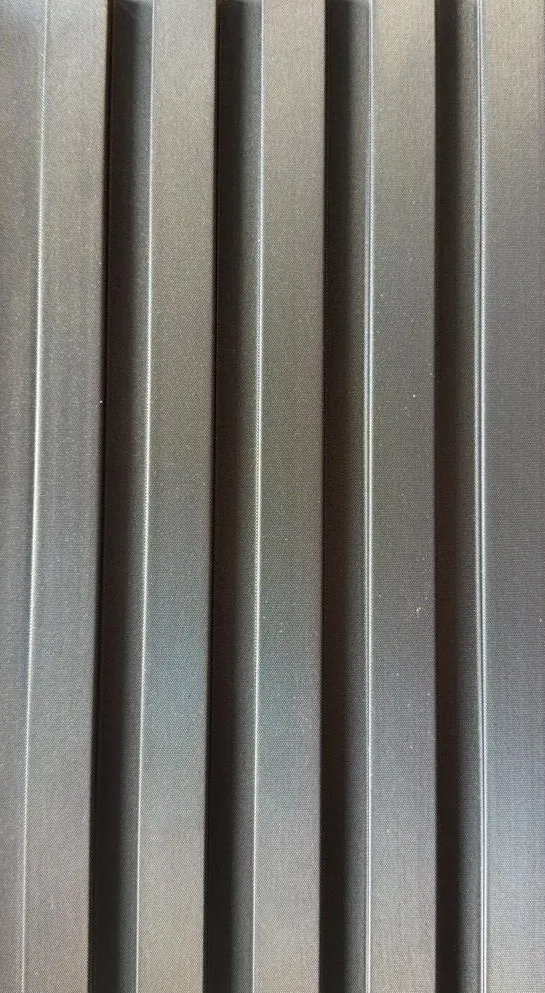 2900 × 159 × 10 mm
 Wall slats — Slat Board
Anthracite PVC Slat Wall Boards — Slat Board KC-6
 2800 × 147 × 12 mm
 Concave boards — Concave Board
Concave PVC Wall Boards in Cream White — Concave Board KX-27
 2900 × 1220 × 8 mm
 SPC wall panels