Slat walls: everything worth knowing before you start
Slat walls: choosing the finish, running them horizontally or vertically, lighting them properly, improving the acoustics. The complete guide, with the mistakes to avoid.
It is probably the most repeated decorative move of recent years, and it has a rare quality: it transforms a room without furnishing it. A slat wall adds verticality, texture and a soft shadow — where paint, whatever its colour, stays flat.
It still has to go in the right place, run the right way, and be lit properly. That is what this guide is for.
Individual battens or pre-assembled boards?
There are two ways to build a slat wall, and the difference in installation time is considerable.
Individual battens, screwed or bonded to the wall one at a time. You have total control over the spacing, but every batten has to be plumbed, spaced with a gauge and fixed. On a 3 m wall, allow a full day.
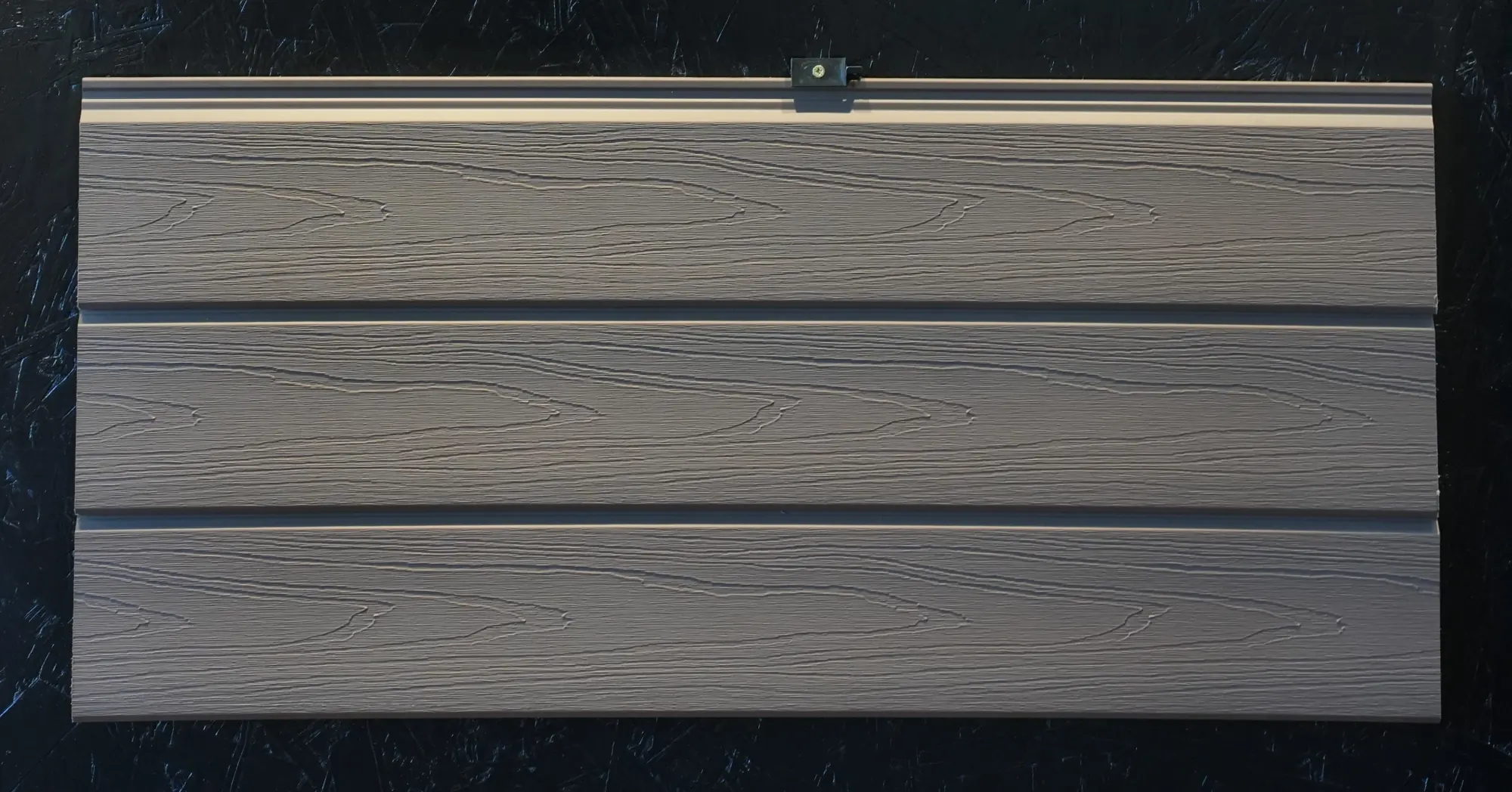
Pre-assembled boards — our Slat Board range — group several battens on a shared 159 mm backing. The spacing is guaranteed at the factory, the boards interlock, and the same wall goes up in under two hours.
For a homeowner, or a fitter who is not a joiner, the second option is almost always the right one.
Choosing the finish
The shade you choose sets the mood far more than the profile does.
Pale oaks — natural blond oak, light oak, bleached linen oak — bring light and open a room up visually. They work in small rooms and Scandinavian interiors.
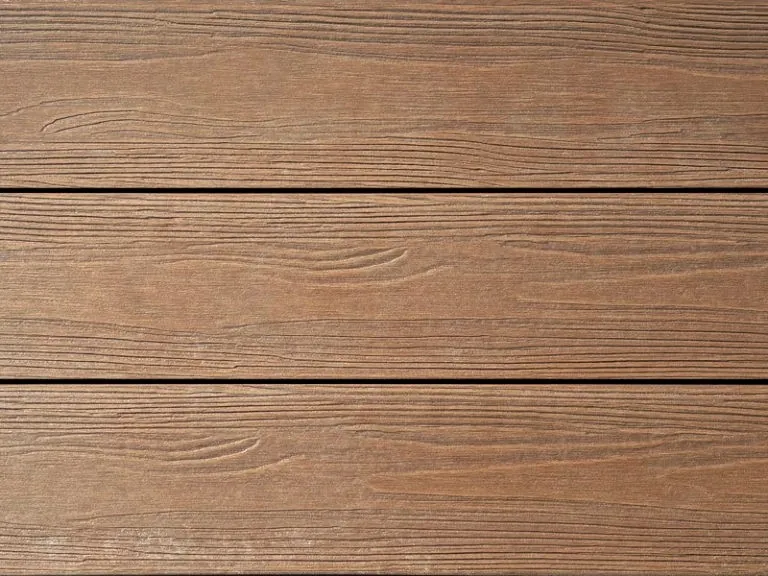
Warm woods — golden brown smoked oak, warm walnut, rosy beige sanded oak — create an enveloping atmosphere. This is the choice for a living room or a headboard.
Plain colours — textured white, off-white, anthracite — work on relief alone, with no colour added. Anthracite is particularly effective behind a bookcase or a television unit: it makes the wall disappear visually and pushes forward whatever sits in front of it.
Which way to run them
Vertical
This is the default direction, and for good reason: it makes the room taller. The eye follows the lines up to the ceiling, which reads as higher. In a standard Casablanca apartment, with ceilings at 2.70 m, that is a real visual gain.
Horizontal
It lengthens the wall. That is the right call in a corridor, where it creates perspective, or in an unusually tall room where the proportions need rebalancing.
One caveat: run horizontally, the grooves hold more dust. Plan on vacuuming a little more often.
Lighting: the condition for the whole effect
This is the point most often overlooked, and it is the one that makes the difference.
A slat wall lit head-on — by a central ceiling fitting, say — is flat. The slats cast no shadow, and you have paid for relief nobody can see.
A slat wall lit from the side reveals everything: every slat carries its shadow, the surface gains depth, and the wall becomes the strongest element in the room.
Three ways to get there:
- an LED strip recessed into the ceiling, tight to the wall, aimed downwards;
- a lit skirting at the foot of the wall, aimed upwards — the effect is more theatrical;
- wall lights placed very close to the wall.
That decision is made before fitting, because it determines the cable runs and the drop of the suspended ceiling.
Where they work
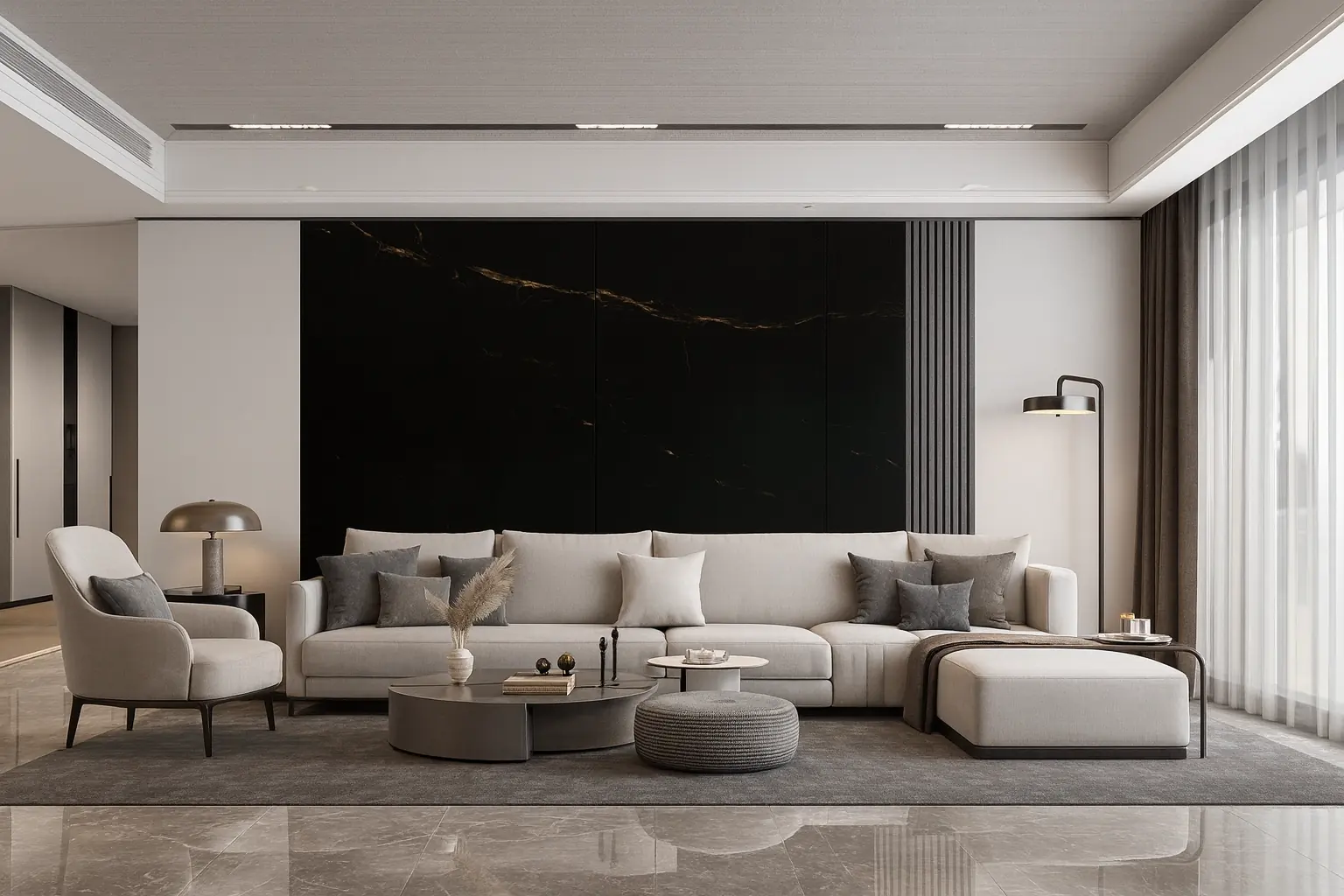
Behind the sofa. The most common use, and the most successful. The wall gives the seating area structure without adding furniture.
As a headboard. Keep it to the width of the bed plus 40 cm each side, around 1.20 m high. A full-height slat wall in a bedroom can become oppressive.
In an entrance hall. On a single wall, it establishes an impression of care the moment the door opens.
Behind a desk or a video-call position. Anthracite or smoked oak gives a backdrop that photographs and films remarkably well.
In a commercial reception, as a side panel to a counter, often paired with a marble-effect SPC panel behind it.
What slats do — and do not do — for acoustics
Let us be precise, because this argument is frequently oversold.
A slat wall fitted on a frame creates an air gap and an irregular surface. Sound waves no longer bounce off a uniform plane: they scatter. The result is reduced echo and a room that “rings” less — an audible difference in a tiled, sparsely furnished living room.
What it is not is acoustic absorption. The sound level does not drop; the reverberation does. For a home cinema, a meeting room or a studio, add an acoustic felt or a mineral wool panel behind the boards: that is where you get real absorption.
The mistakes that spoil the result
Putting them everywhere. One accent wall transforms a room; four slat walls close it in and make it feel like a sauna.
Forgetting the raking light. The relief disappears, and the investment with it.
Neglecting the plumb. On a 2.90 m wall, half a degree out shows immediately on the vertical lines. Check with a laser every three panels, not with a spirit level resting on the relief.
Not planning the cut-outs. Sockets, switches, thermostat: locate them and drill before you fit the board, not after.
Choosing a shade on a screen. Pale woods turn yellow or grey depending on how the screen is calibrated and how your room is lit. Ask for a sample.
Getting it built
Our nine Slat Board finishes are displayed at full size in our Casablanca showroom, lit from the side exactly as they will be in your home. You can leave with samples and look at them in your own light.
And if you send us a photo of your wall with the dimensions, we come back with two or three suitable finishes and the exact board count.
From the theory to the site
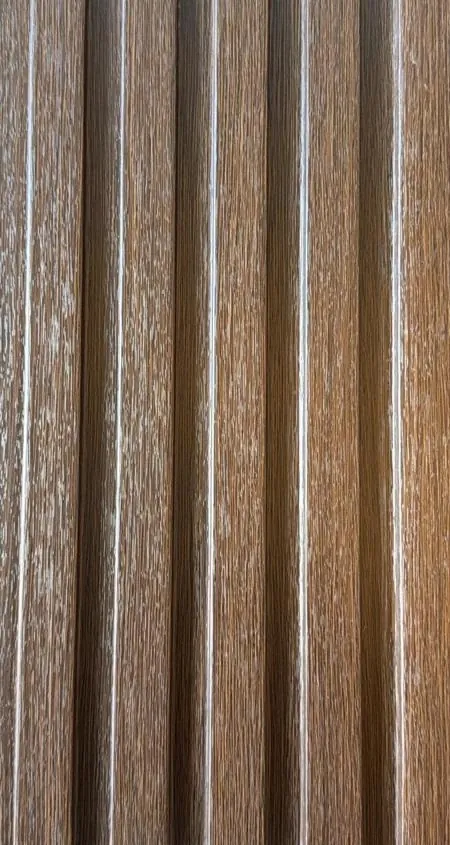 2900 × 159 × 10 mm
 Wall slats — Slat Board
Smoked Oak Golden-Brown Wood-Effect Wall Slats — Slat Board KM-11
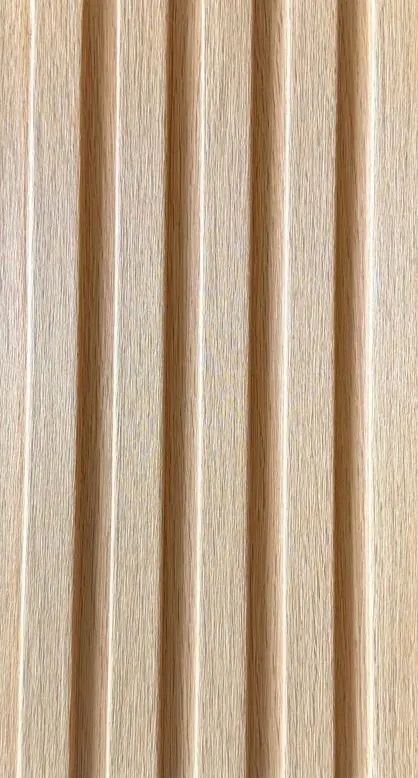 2900 × 159 × 10 mm
 Wall slats — Slat Board
Natural Blond Oak Wood-Effect Slat Wall Boards — Slat Board KM-9
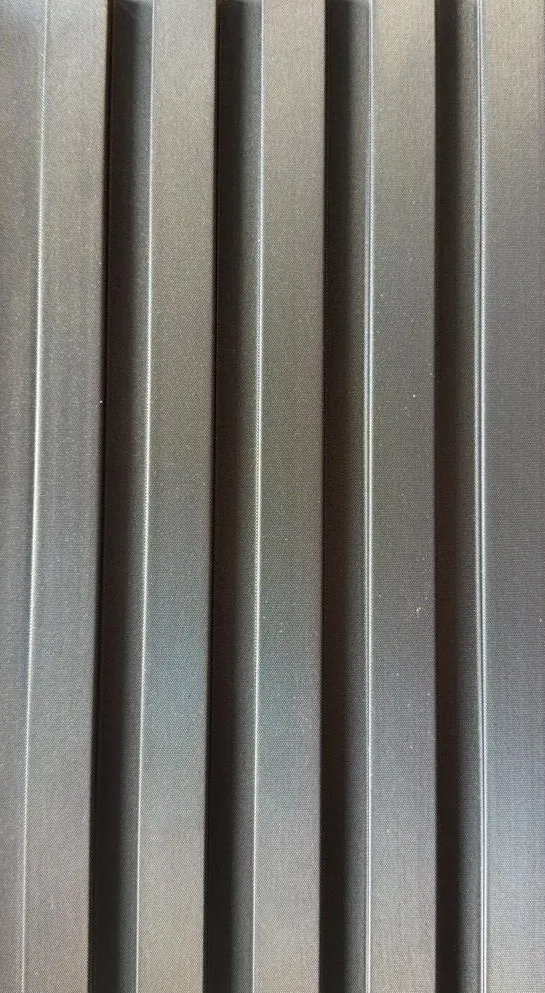 2900 × 159 × 10 mm
 Wall slats — Slat Board
Anthracite PVC Slat Wall Boards — Slat Board KC-6
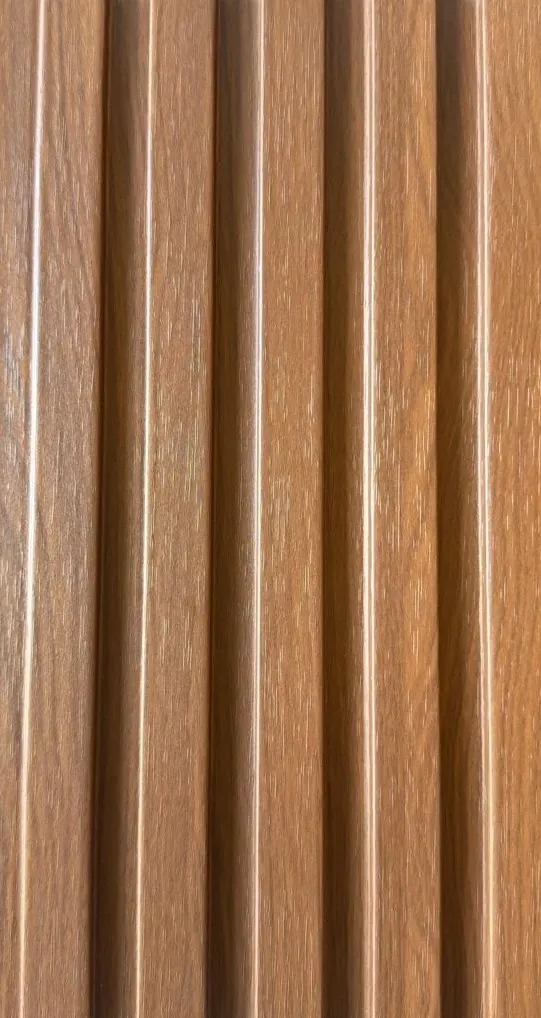 2900 × 159 × 10 mm
 Wall slats — Slat Board